Dry Brine Pork Ribs in the Oven

Ribs are easy to like and surprisingly easy to ruin. Low heat alone does not guarantee tenderness. Sauce alone does not guarantee flavor. And “fall off the bone” is often a polite way of saying the meat was steamed into submission.
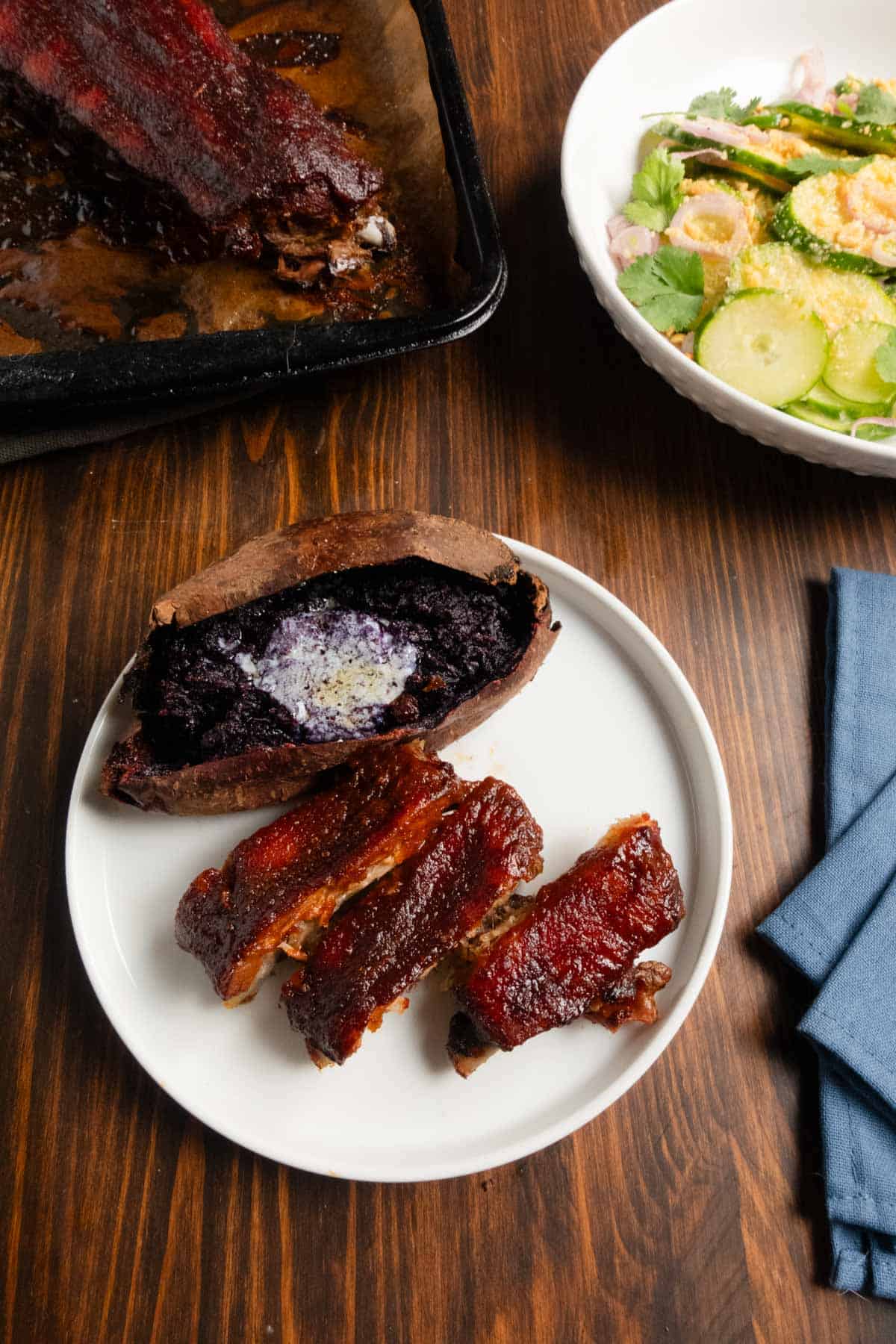
These dry brined pork ribs are different. They are seasoned all the way through, not just lacquered on the surface. The texture is tender, but structured; the meat releases cleanly from the bone without turning mushy. The exterior caramelizes instead of steaming.
This is not just a rib recipe. It is a technique that makes every rack you cook better from now on.
Why You’ll Love This Recipe
- Deep seasoning throughout; not just on the crust
- Tender ribs with real structure; not rubbery, not mushy
- No buckets, no marinades, no complicated prep
- Dry brining works for oven baking, grilling, or smoking
- Makes barbecue sauce taste layered instead of sugary
What You’ll Walk Away Knowing
- What dry brining is and why it improves pork ribs
- How salt changes texture and moisture retention
- Exactly how long to brine for optimal tenderness
- How to create a caramelized exterior without overcooking
How to Dry Brine Pork Ribs
Dry brining pork ribs does two important things at once: it seasons the meat from within and improves the final texture without adding extra steps.
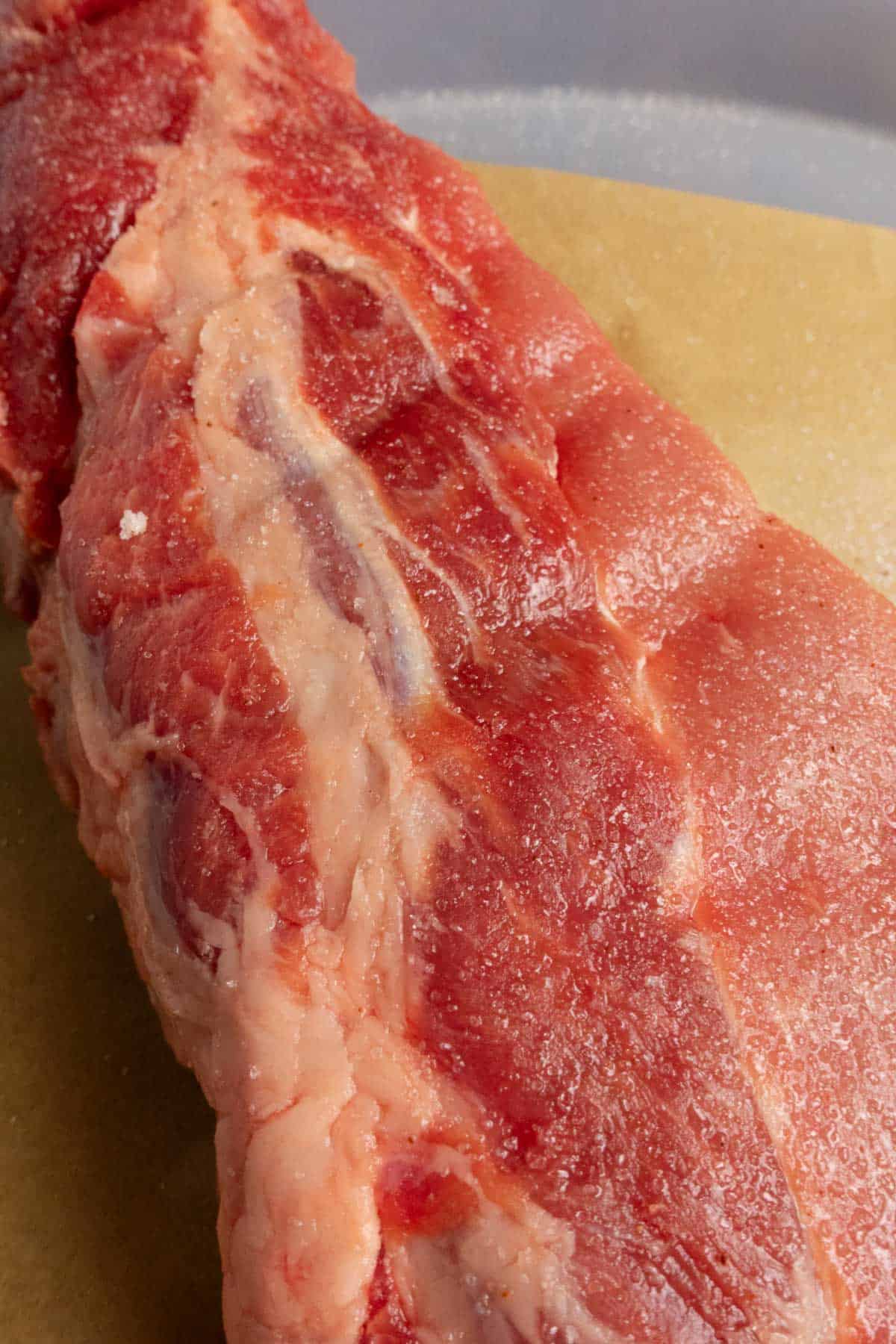
When you salt the ribs, salt begins drawing moisture to the surface through osmosis. Those tiny beads of moisture dissolve the salt, forming a concentrated, seasoned liquid. Over time, that liquid is reabsorbed into the meat, carrying seasoning deeper than any surface rub ever could. The result is ribs that taste fully seasoned; not salty on the outside and bland in the center.
Salt also gently alters muscle proteins. This helps the meat retain moisture during the long cook, even as fat renders. That is why dry brined ribs feel juicier and more tender; not because they were cooked longer, but because they were prepared better.
Unlike wet brining, there is no dilution of flavor and no oversized container crowding your refrigerator. Just salt, airflow, and time.
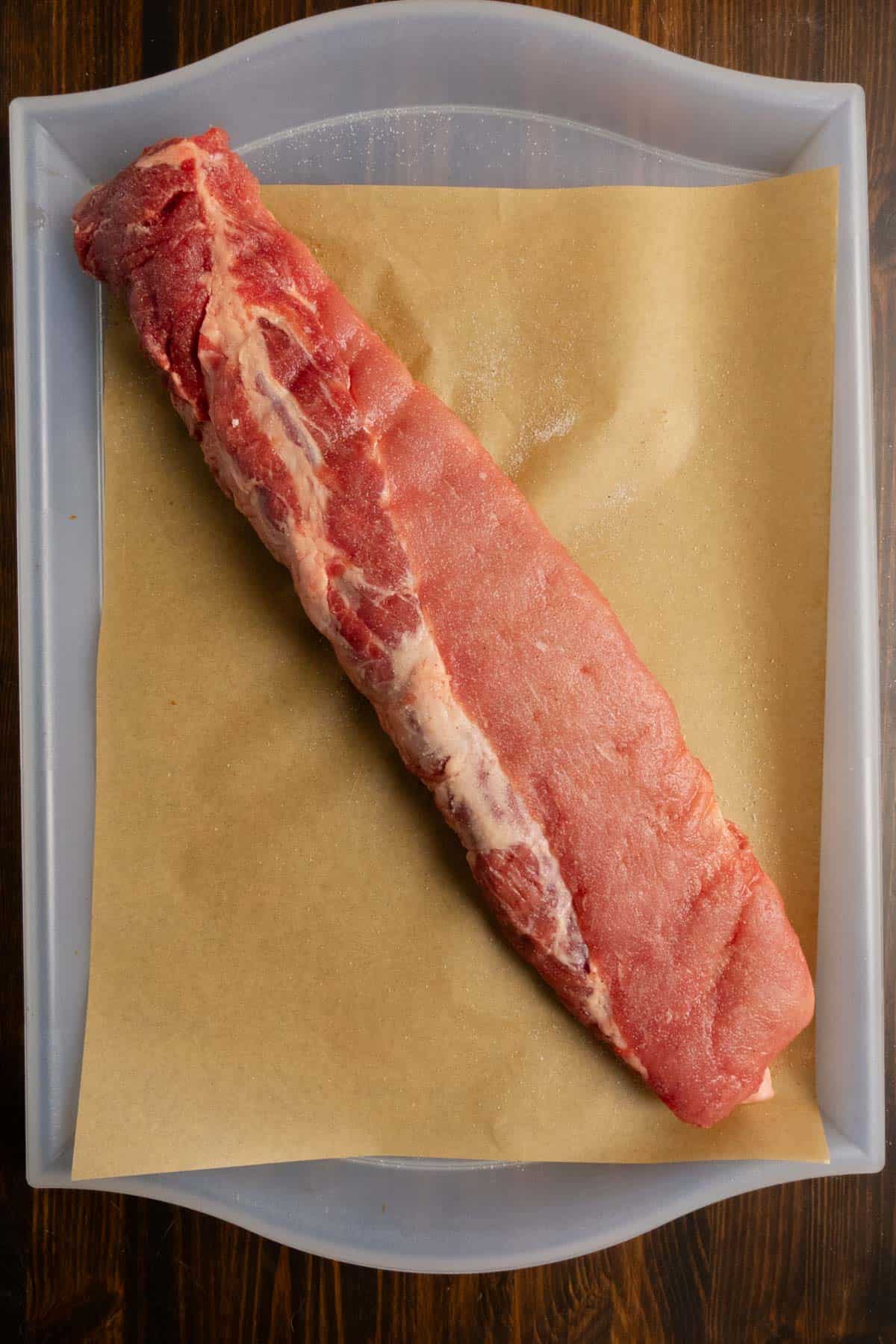
- Remove the ribs from packaging and pat completely dry.
- If the membrane is intact on the back, remove it for better seasoning penetration and texture.
- Season evenly with kosher salt on all sides. A good guideline is ½ to 1 teaspoon per pound of meat.
- Place the ribs on a rack set over a sheet pan. Refrigerate uncovered for 12 to 24 hours.
Twelve hours gives noticeable improvement. Twenty-four hours delivers deeper seasoning and a slightly firmer, more structured bite. Beyond 36 hours, the texture begins to feel more cured than roasted.
Ingredient List
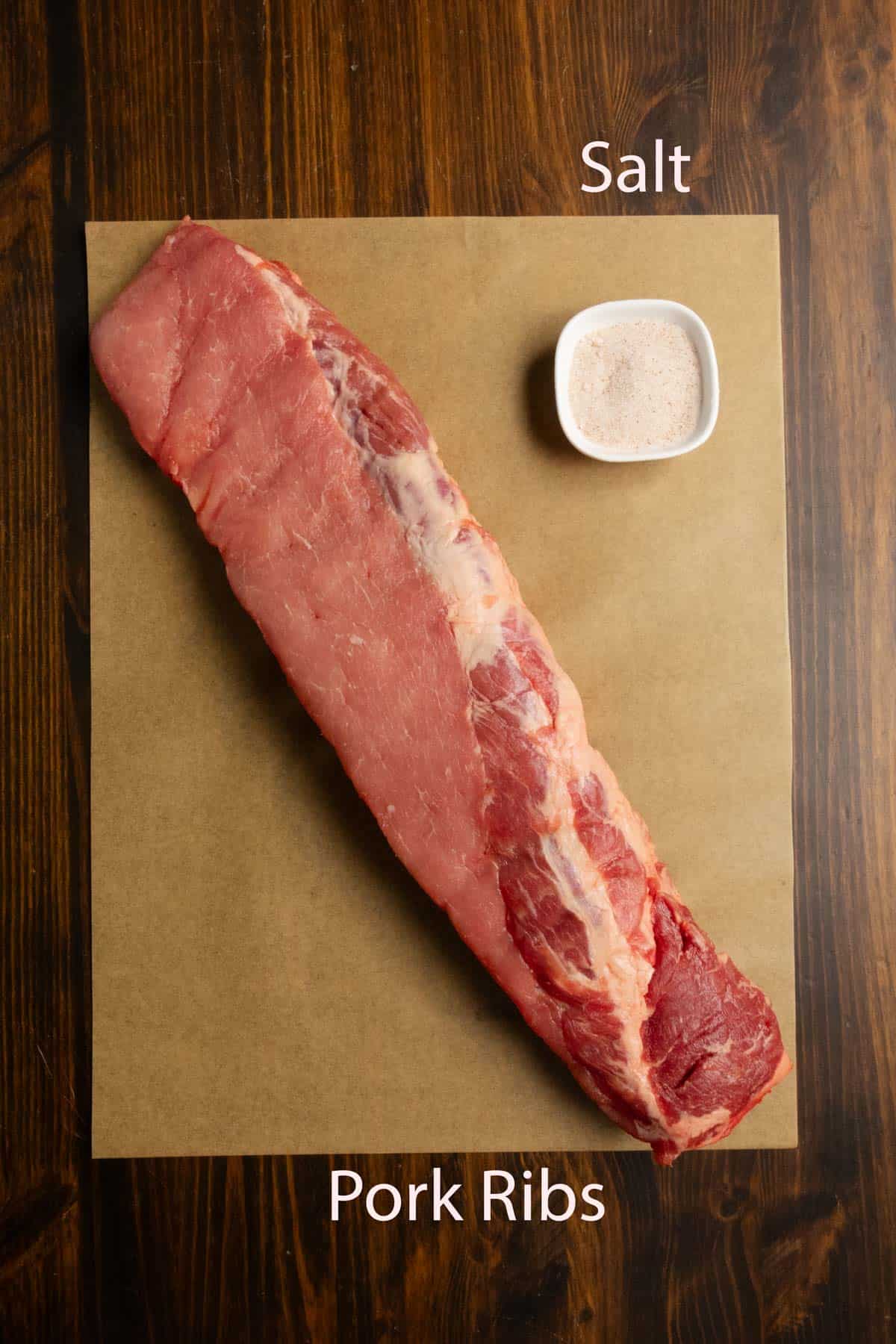
Pork Ribs: Baby back ribs or pork back ribs work beautifully.
Salt: Use kosher salt or a clean sea salt such as Redmond Real Salt. Avoid iodized table salt; it is too harsh and difficult to control.
Barbecue Sauce: I love these with a mustard-based Carolina barbecue sauce, but they also work with a tomato-based chipotle barbecue sauce or a dry rub. The dry brine enhances any direction you choose.
How to Make Dry Brine Pork Ribs in the Oven
Dry Brine the Ribs
- Pat ribs dry thoroughly.
- Season evenly on both sides with salt.
- Place on a rack over a sheet pan and refrigerate uncovered for 24 hours.
Bake the Ribs
- Preheat the oven to 275°F. Line a baking sheet with parchment and place ribs on top. Cover tightly with aluminum foil.
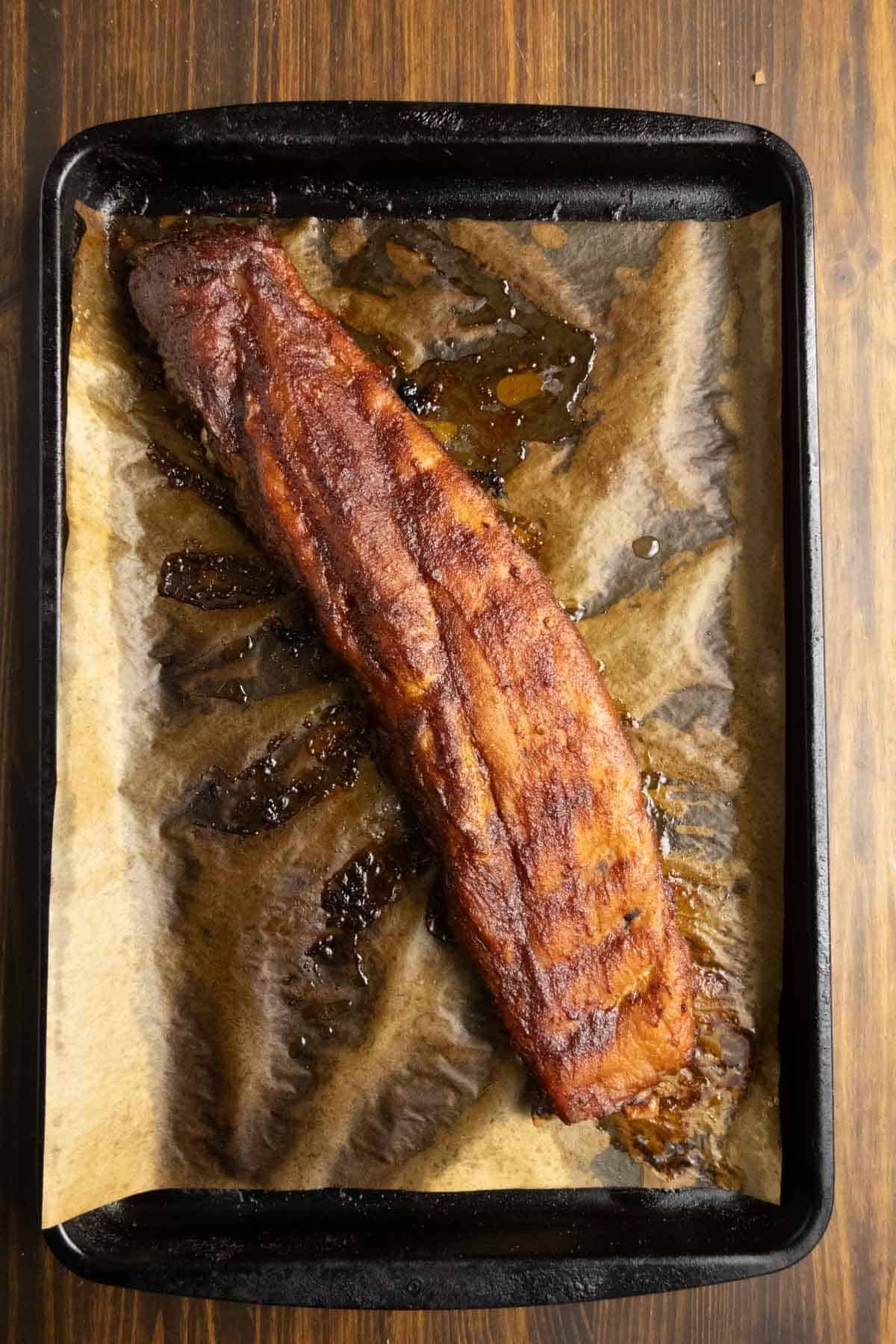
- Bake for 2½ to 3 hours, until the meat is tender, but not falling apart. When you lift the rack with tongs, the surface should crack slightly and the bones should begin to show. I cooked my ribs 2 ½ hours before proceeding.
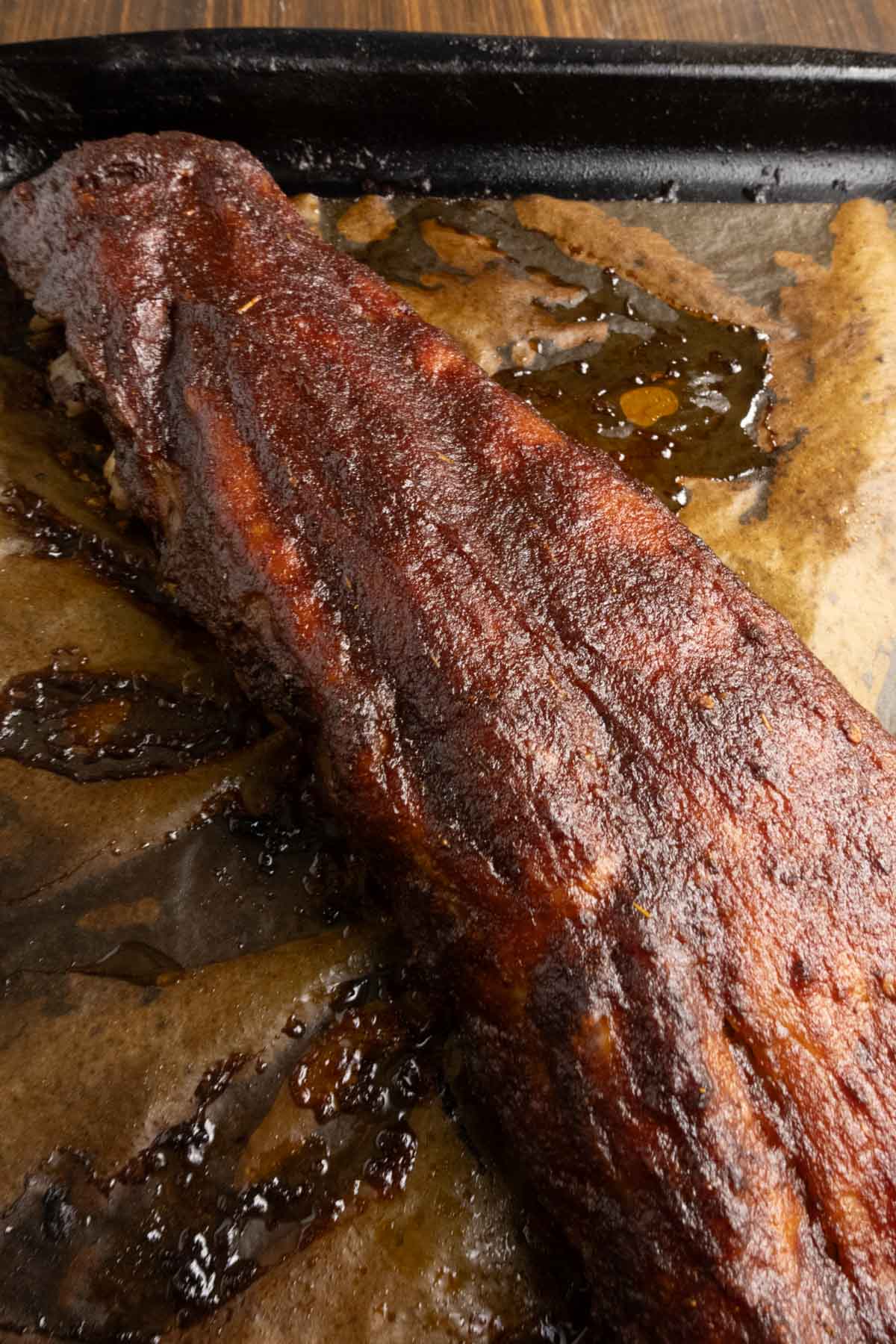
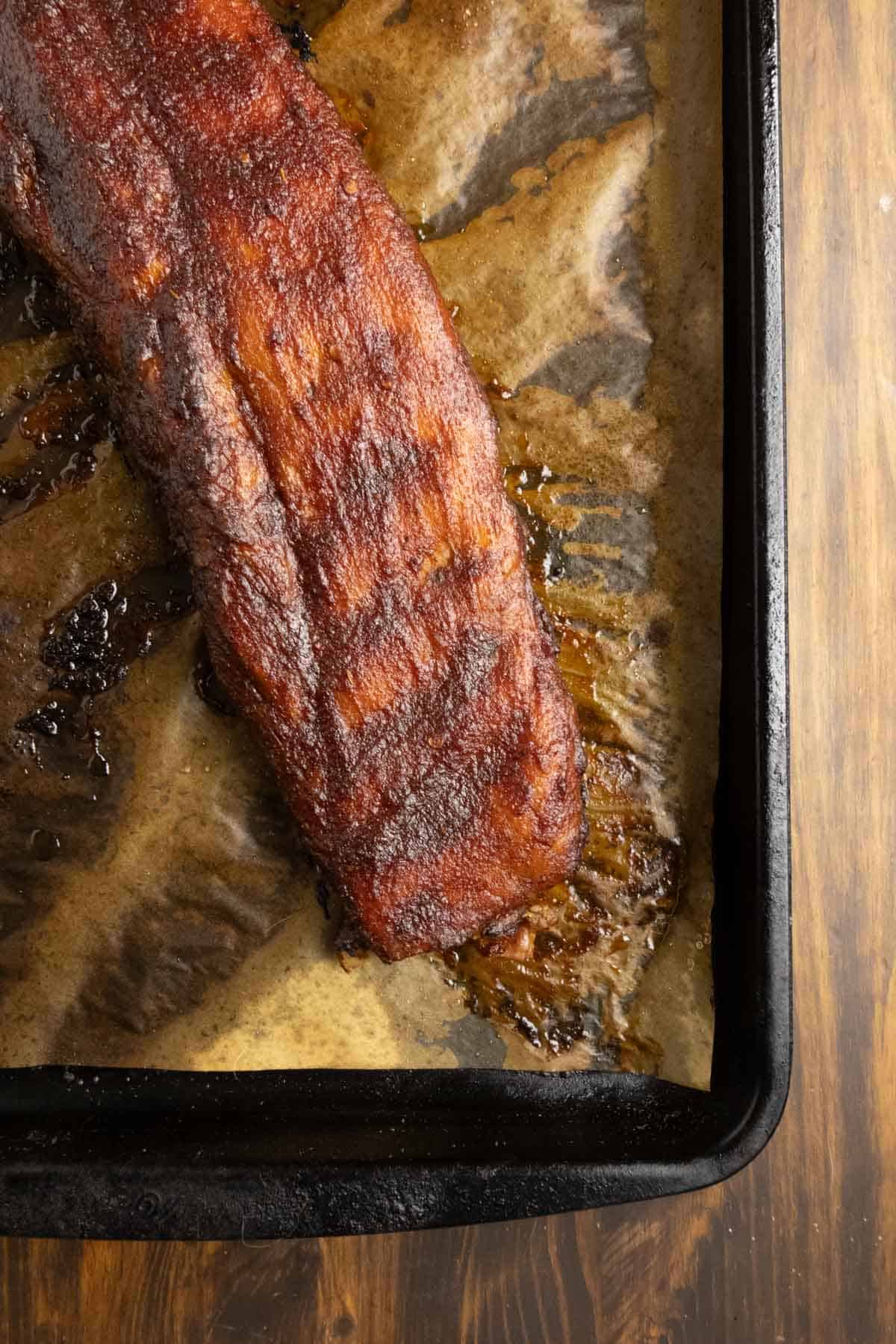
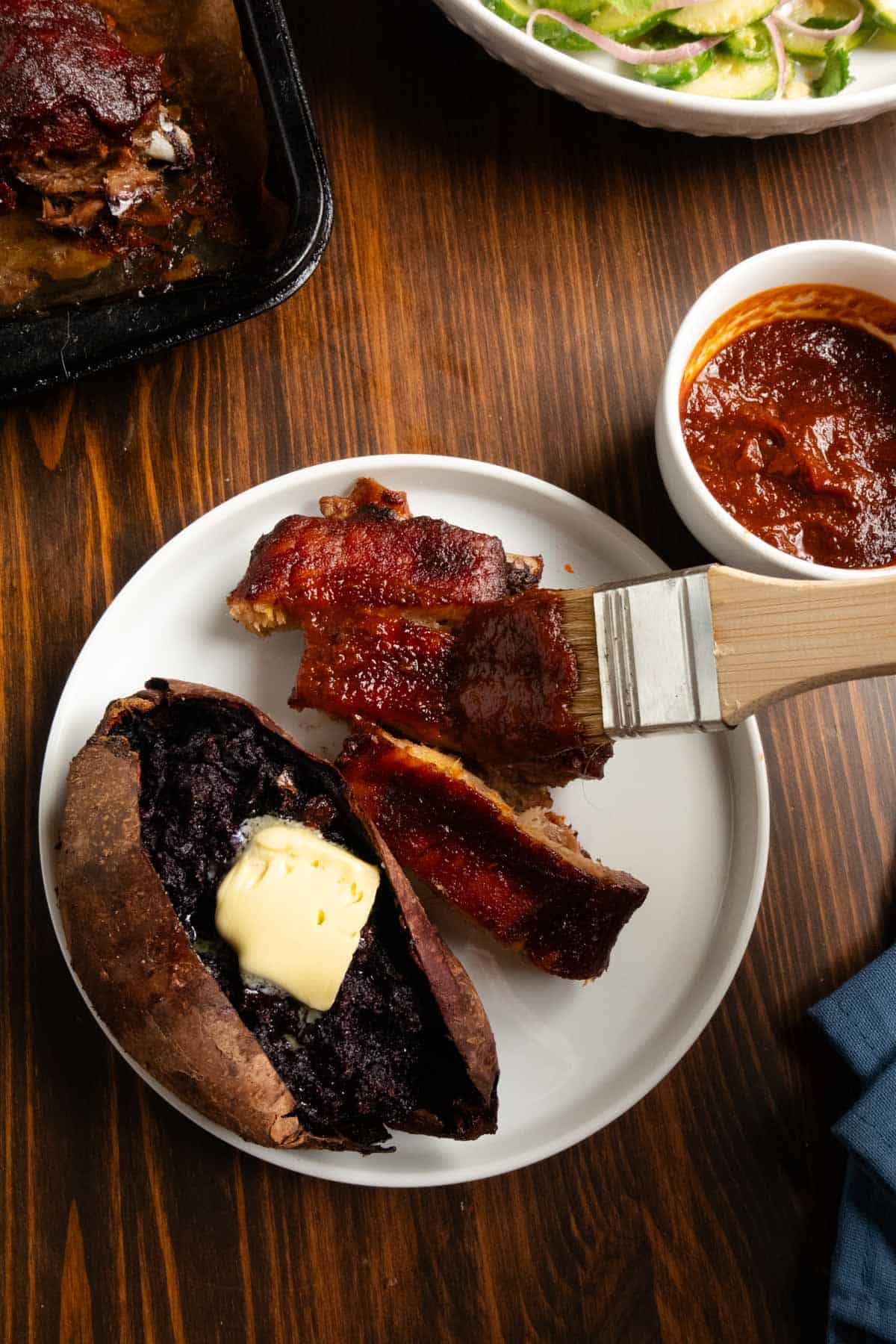
- Increase oven temperature to 325°F. Remove foil, brush with barbecue sauce, and bake for 15 minutes to set the glaze. Remove and baste again then bake for 15 minutes for deeper caramelization.
- Broil 1–2 minutes at the end for extra crust, watching closely.
- Let rest for 10 minutes before slicing. You should hear a gentle crackle when the knife slides between bones.
Expert Tips
Dry means dry. If the ribs still look wet when they come out of the refrigerator, pat them lightly before baking.
Structure over collapse. Properly cooked ribs should bend and slightly crack when lifted; they should not disintegrate. If they are completely falling off the bone, they are overcooked.
Sauce is a finish, not a crutch. Because the meat is seasoned throughout, you do not need a heavy hand with barbecue sauce.
Storage: Store leftovers in an airtight container for up to 4 days. Reheat covered at 300°F until warmed through, then uncover briefly to restore the exterior.
Plating and Finishing Touches
If you want these to feel composed rather than casual, try this:
- Smear a thin layer of roasted garlic or black garlic onto the plate before laying the ribs down. The heat softens it and perfumes each bite.
- Finish with flaky salt and a light brush of warm sauce for shine.
- Scatter fresh herbs; parsley or chives add color and cut richness.
- Serve sliced cleanly between bones for intention rather than hacking through the rack at the table.
Ribs can feel rustic. They do not have to feel careless.
Serving Suggestions
Roasted Broccoli or Roasted Romanesco: Roasted broccoli or Romanesco brings charred, crisped edges and a faint bitterness that cuts through the richness of the ribs; the florets catch caramelized bits in their crevices, giving you smoky crunch against tender meat.
Potatoes Gratin Without Cream: A potatoes gratin offers thin layers that bake into golden, lacy edges and a tender center; it absorbs rib juices without becoming heavy, letting the salt and fond shine instead of drowning in dairy.
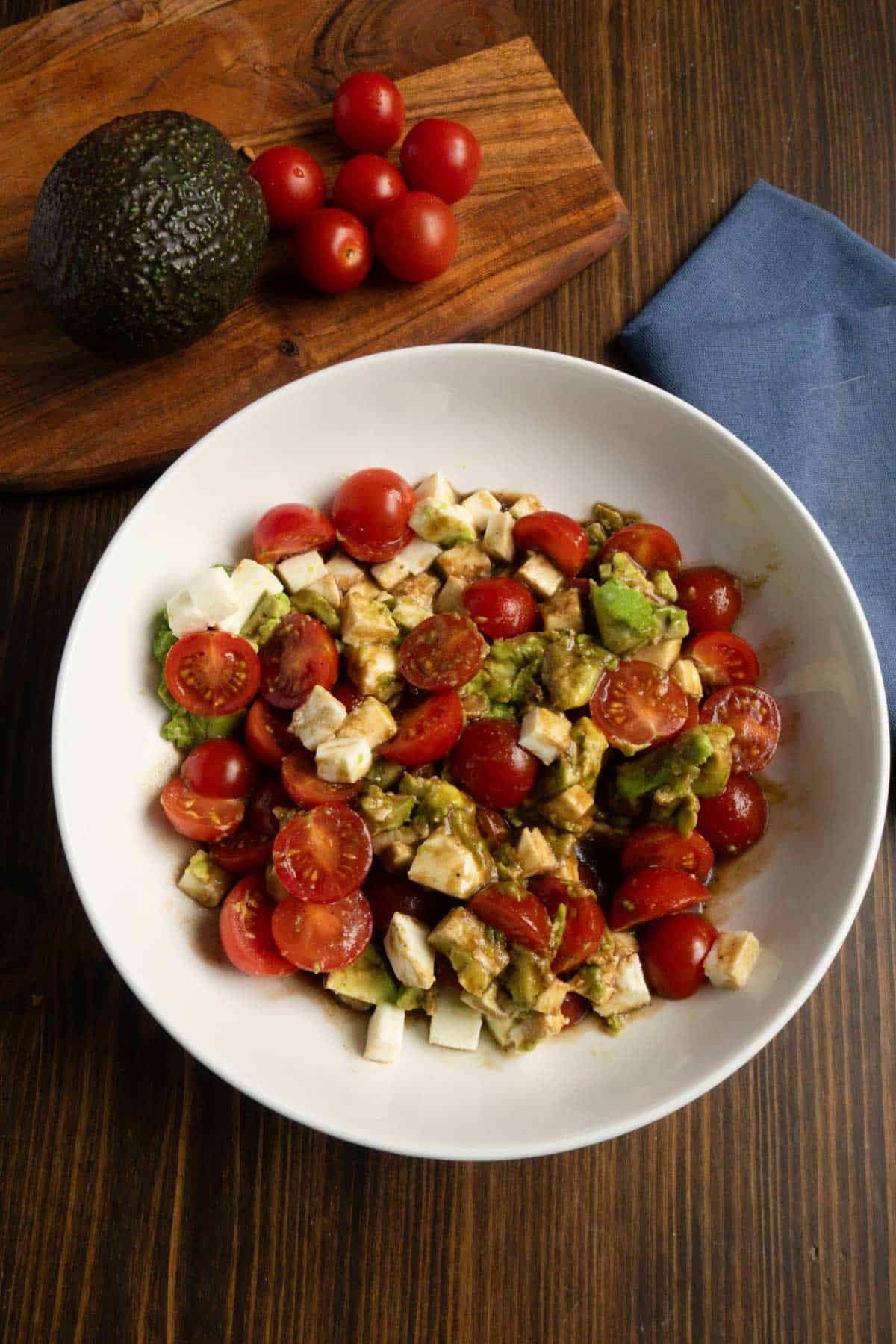
Tomato, Avocado, and Mozzarella Salad: Juicy tomatoes and creamy avocado cool the palate between bites, while fresh mozzarella stretches softly against the heat of the ribs; a sharp splash of vinegar keeps everything bright and awake.
Roasted Radishes: Roasted radishes lose their bite and turn mellow and slightly sweet, with blistered skins and buttery centers; they echo the slow roast of the ribs while keeping the plate from feeling predictable.
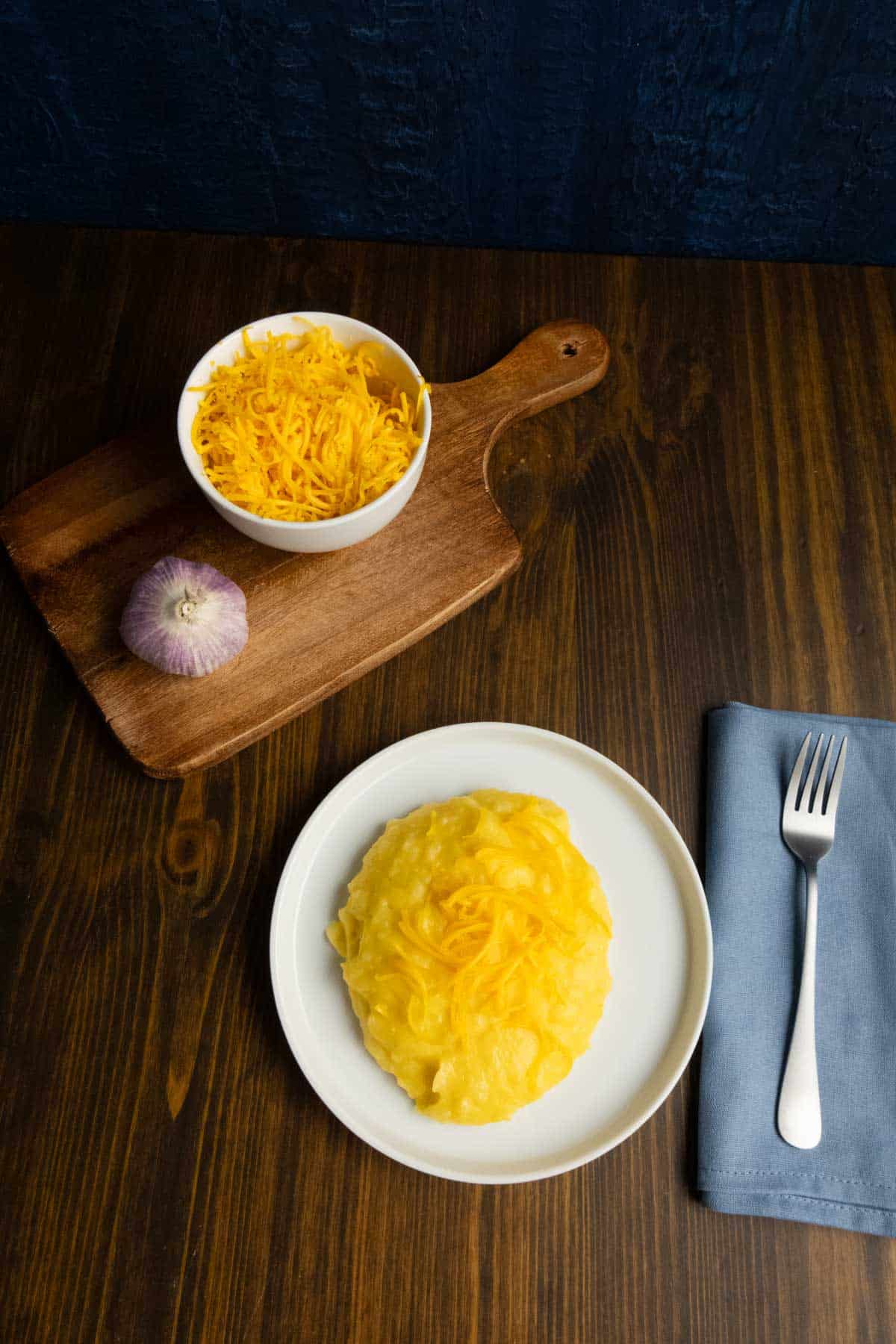
Cheesy Garlic Mashed Potatoes: Cheesy garlic mashed potatoes fold roasted garlic into warm, fluffy peaks that catch rib glaze in silky swirls; each forkful feels indulgent, but grounded, not one-note.
Oven Baked Fries: Oven baked fries bring crisp exteriors and fluffy centers, perfect for dragging through leftover sauce; the salt on their surface sharpens every smoky bite of pork.
Spinach Squares: Spinach squares add structure and savoriness, with tender greens and pockets of melted cheese that contrast the sticky crust of the ribs; they feel nostalgic yet intentional, like something passed across a crowded table.
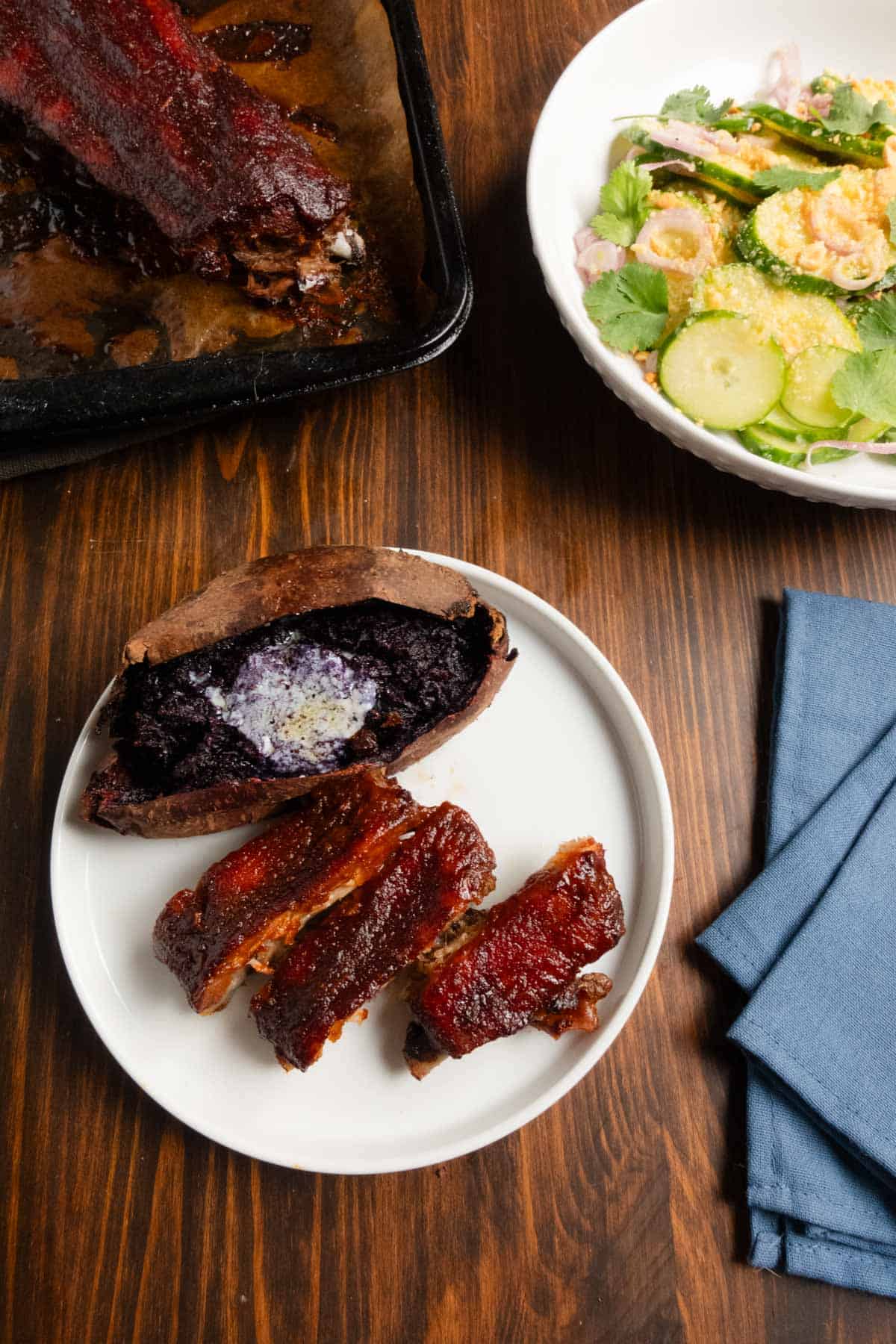
Baked Purple Sweet Potatoes: Split them open while they’re still steaming and the violet flesh turns plush and custardy, lightly sweet with a chestnut-like depth. A pinch of salt melts into the surface, and suddenly that soft, honeyed warmth catches the rib juices and turns them into something almost buttery.
Thai Cucumber Salad: A cold, crackling counterpoint to the ribs; crisp cucumbers snap under the knife, then bloom with lime, fish sauce, and a whisper of heat that clears the palate and makes each smoky bite taste brighter. It’s sharp, juicy, and electric; the kind of side that keeps rich meat from ever feeling heavy.
FAQs
Yes, but salt must still be the primary component. Sugar-heavy rubs can draw too much moisture and burn later. Add additional spices after the brine if you want more complexity.
No. Rinsing removes the seasoning you worked to develop.
Yes, but freeze before cooking. Thaw uncovered in the refrigerator to preserve surface dryness.
You will see some improvement, but the internal seasoning will not be as developed. Aim for at least 12 hours.
Yes. St. Louis ribs are slightly larger and may need additional cooking time, but the dry brine technique works exactly the same.
Dry brining ribs changed how often I make them. No rubbery meat. No bland center hidden under sauce.
If you enjoy learning foundational techniques that make everything you cook stronger, join my newsletter. I share the kind of small shifts that quietly transform your kitchen into something confident and deliberate.
Because ribs are good. But ribs done well are unforgettable.
The Bluster and the Burrow
Dry Brine Pork Ribs in the Oven
Ingredients
- 5-6 pounds Baby Back Pork Ribs can scale up or down
- 1 tablespoon salt sea, Himalayan, or Redmond Real
Instructions
Dry Brine the Ribs
- Pat 5-6 pounds Baby Back Pork Ribs dry thoroughly.
- Season evenly on both sides with 1 tablespoon salt.
- Place on a rack over a sheet pan and refrigerate uncovered for 24 hours.
Bake the Ribs
- Preheat the oven to 275°F. Line a baking sheet with parchment and place ribs on top. Cover tightly with aluminum foil.
- Bake for 2½ to 3 hours, until the meat is tender, but not falling apart. When you lift the rack with tongs, the surface should crack slightly and the bones should begin to show. I cooked my ribs 2 ½ hours before proceeding.
- Increase oven temperature to 325°F. Remove foil, brush with barbecue sauce, and bake for 15 minutes to set the glaze. Remove and baste again then bake for 15 minutes for deeper caramelization.
- Broil 1–2 minutes at the end for extra crust, watching closely.
- Let rest for 10 minutes before slicing. You should hear a gentle crackle when the knife slides between bones.

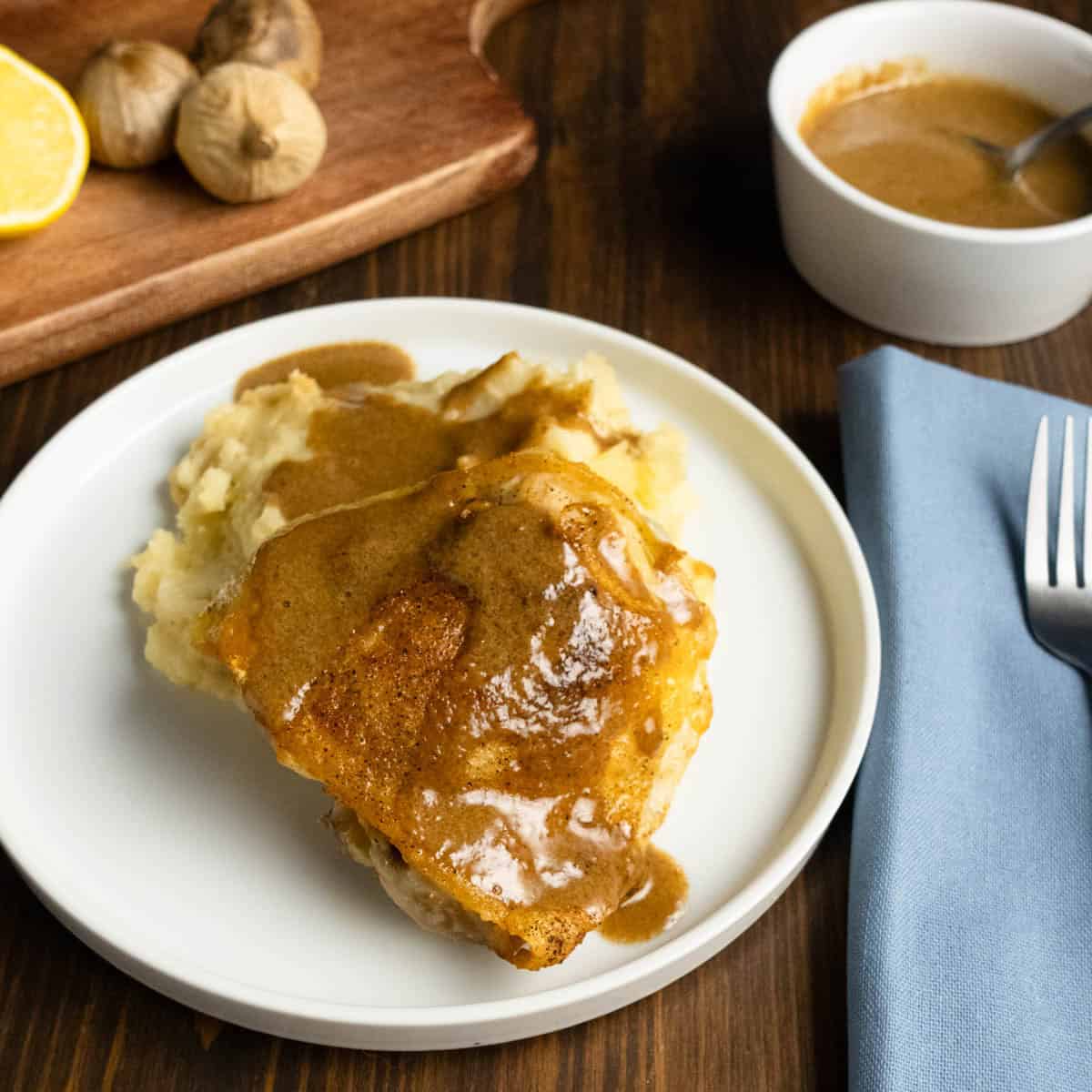
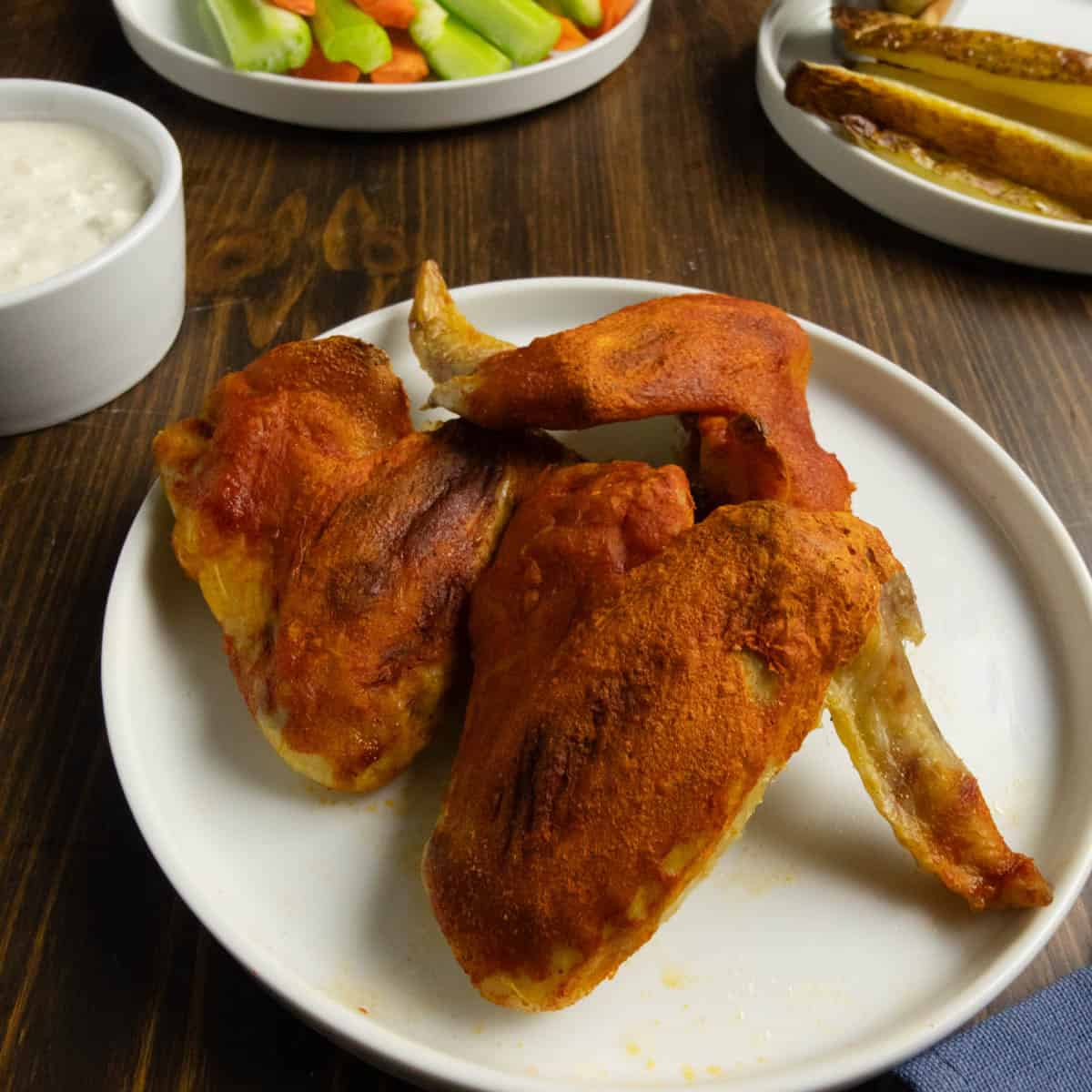
I love dry brined ribs because of how tender they become in the end. It’s impressive and simple, which is always a win.