Romanesco Recipe

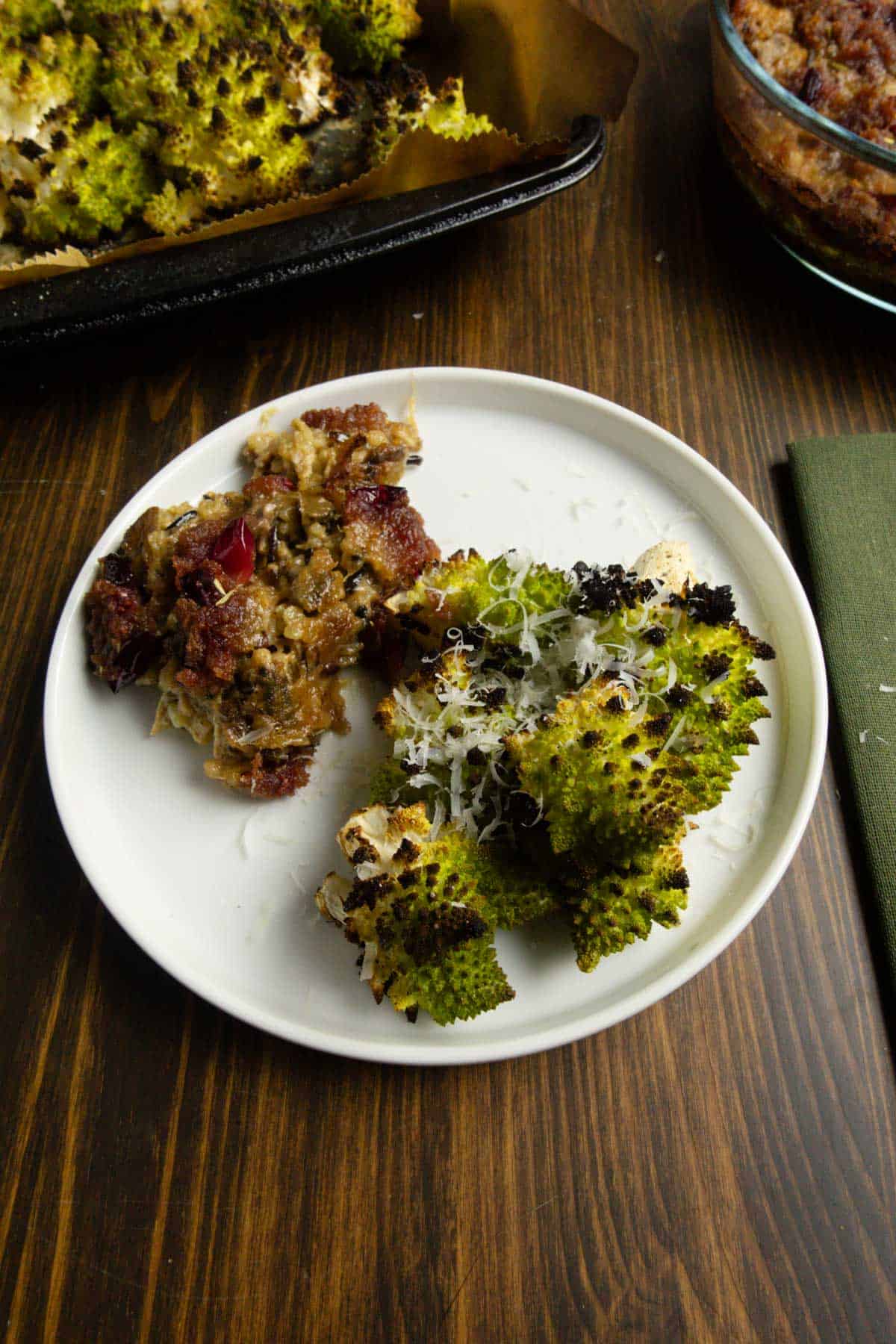
Romanesco looks like it wandered out of a winter fairy tale—lime green, spiraled, a living fractal. Somewhere between broccoli and cauliflower in flavor, it has a nuttiness that deepens when roasted and a structure that rewards high heat.
The first time I cooked Romanesco, it came out darker than I expected. Not burnt—intentionally bronzed. The edges were crisp and savory, the centers tender, and every little crevice caught heat just enough to taste roasted rather than steamed. That contrast is the magic here.
If you’ve made my roasted broccoli, this technique will feel familiar. But Romanesco brings something extra: more texture, more crunch, and a sense that you’ve done something quietly impressive without complicating your evening.
Why You’ll Love this Recipe
- A vegetable that feels special without being fussy
- Deeply savory with crisp, browned edges and tender centers
- Quick enough for weeknights, elegant enough for guests
- Naturally nutritious without trying to be “health food”
What You’ll Walk Away Knowing
- What romanesco is and how it differs from broccoli and cauliflower
- How high-heat roasting creates crisp edges without drying vegetables out
- How to judge doneness beyond “looks browned, hope for the best”
What is Romanesco?
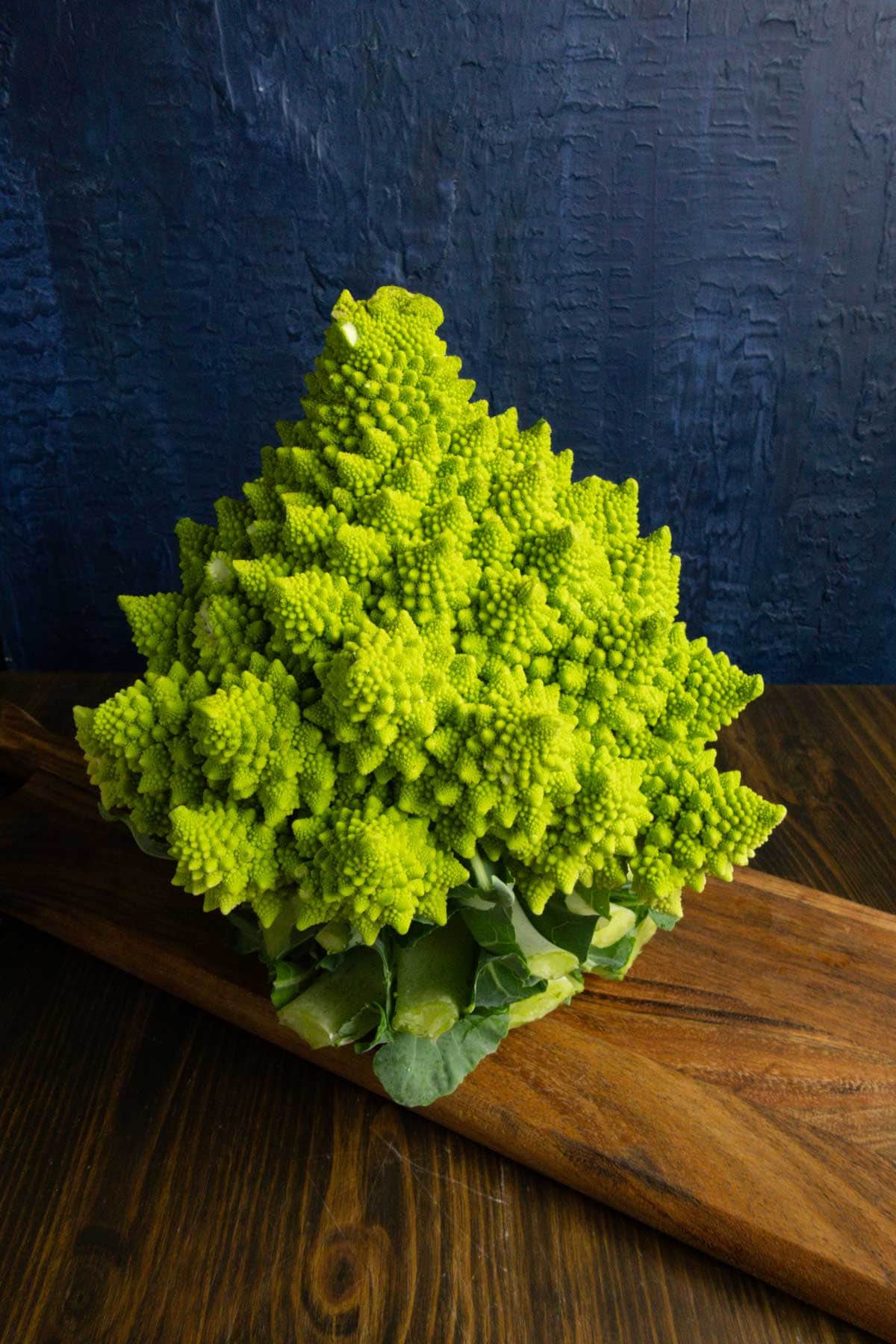
Romanesco is a member of the brassica family, closely related to cauliflower and broccoli. Its signature fractal shape isn’t just beautiful—it’s functional. Those repeating spirals create tiny ridges and pockets that catch heat, allowing the vegetable to crisp up beautifully when roasted.
It’s not always easy to find. I usually spot it at roadside produce stands or farmers markets rather than standard grocery stores, which makes it feel a little like a seasonal treasure. When you do find it, it’s worth grabbing—Romanesco is mild, nutty, and far more forgiving than it looks.
Ingredient List
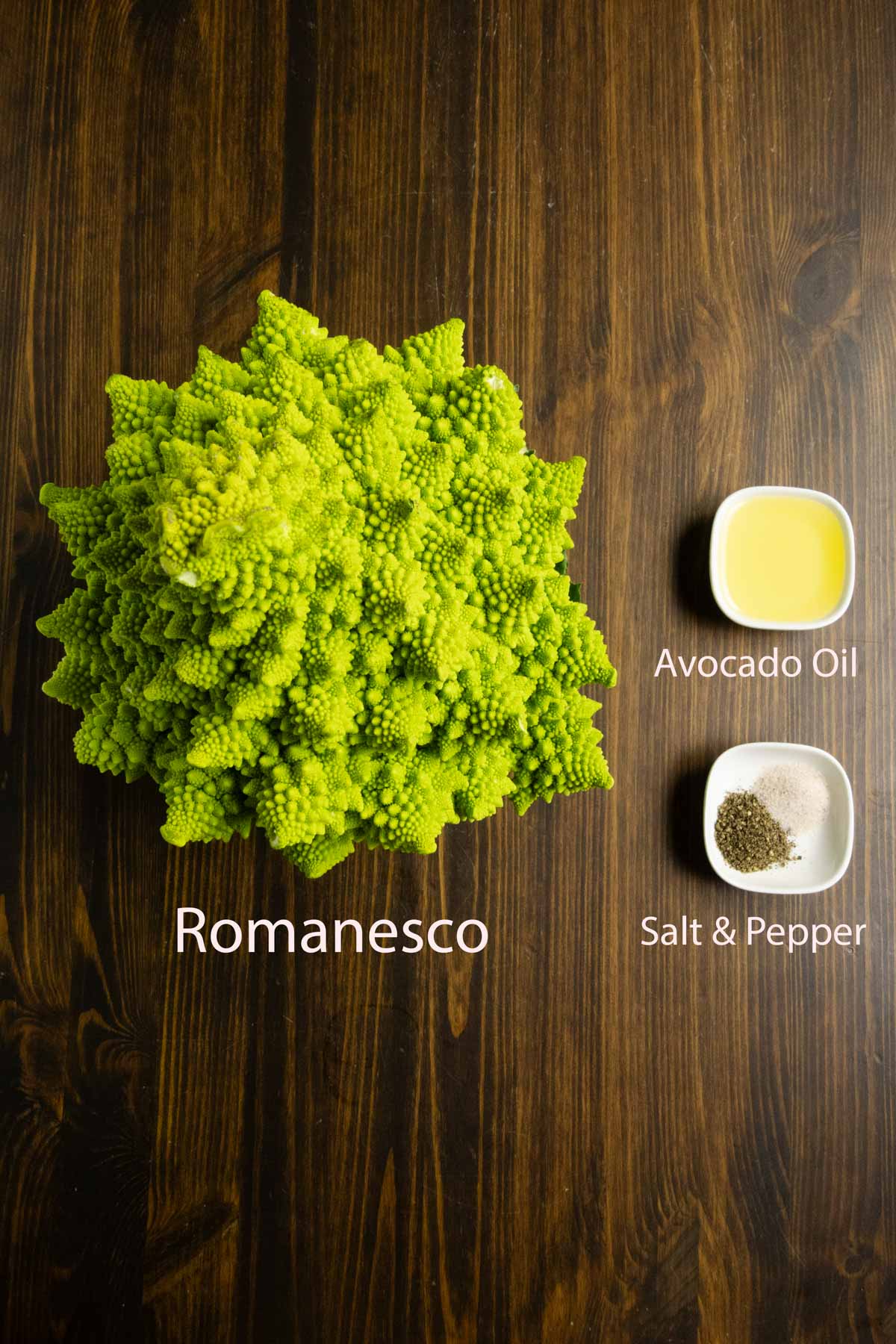
Romanesco: Choose a head that’s firm and vibrantly green, without soft spots or browning. Cut into evenly sized florets—about golf-ball sized—so they roast at the same rate. A few smaller, extra-crispy bits are not a flaw; they’re a reward.
Avocado Oil: High smoke point oils are essential here. This is not the time for olive oil which will smoke, burn, and tap out early.
Salt & Black Pepper: Simple seasoning lets the natural nuttiness shine. You can build from here later.
How to Make Roasted Romanesco
- Preheat the oven to 450°F and line a baking sheet with parchment paper.
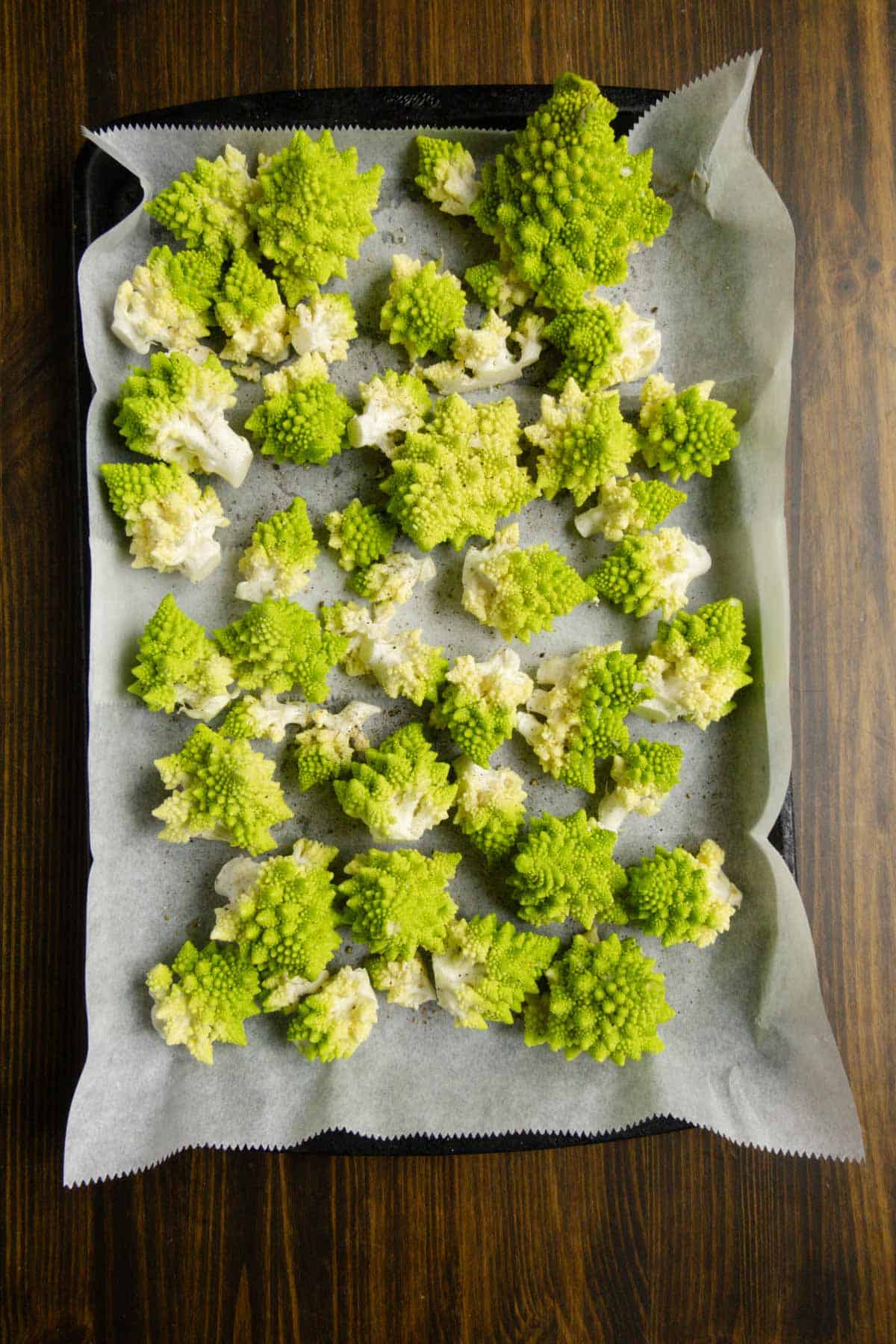
- Cut the romanesco into evenly sized florets and dry thoroughly.
- Toss with avocado oil, salt, and black pepper until lightly coated.
- Spread into a single layer—give the florets space to roast, not crowd.
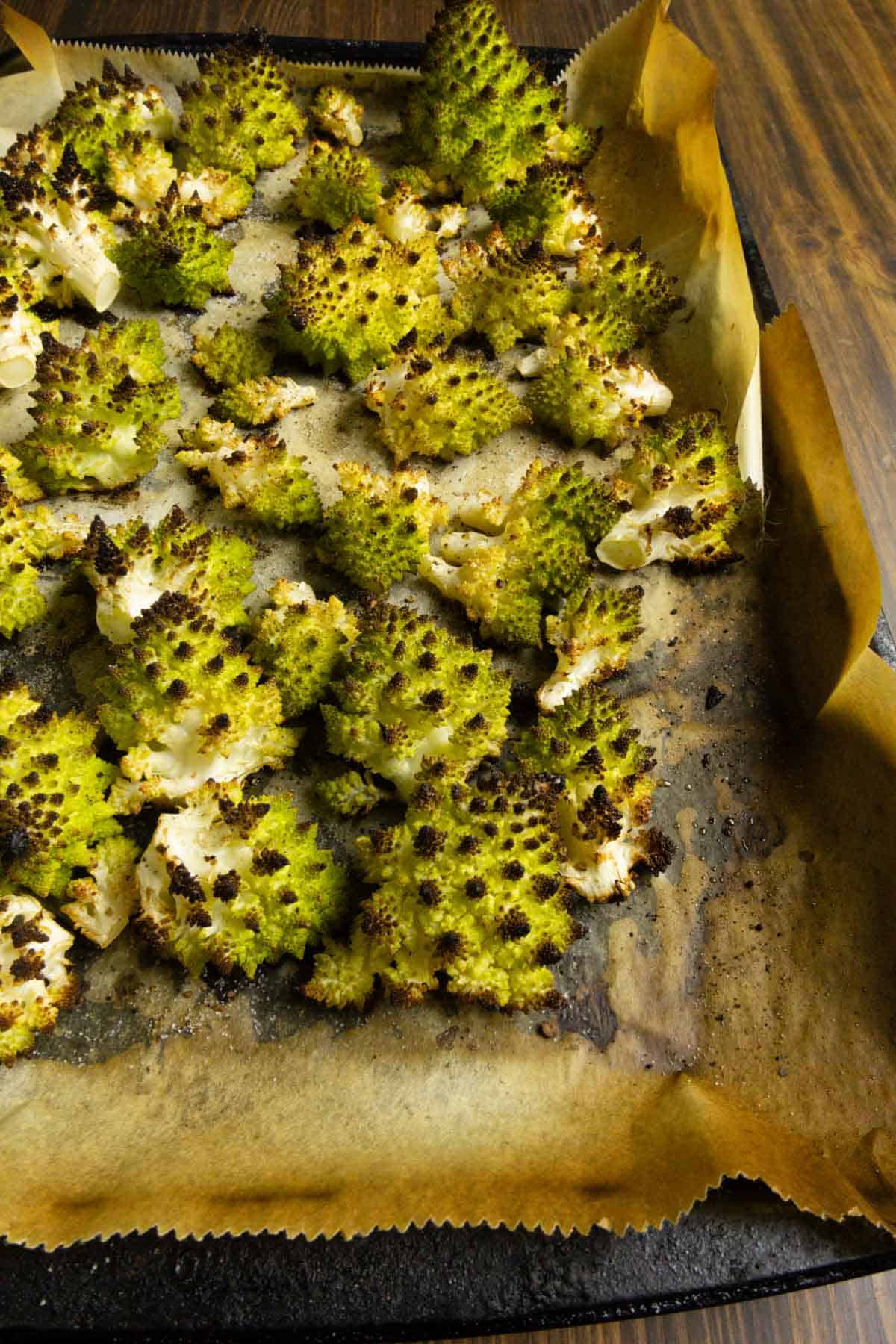
- Roast for 25 minutes, then test for doneness by piercing with a knife.
- If tender with deeply browned edges, it’s ready. If not, return to the oven for 5–10 more minutes.
Expert Tips
- Dryness is non-negotiable. Any lingering moisture will steam the Romanesco and prevent crisping. Pat it dry like you mean it.
- High heat is the point. Romanesco thrives at temperatures that scare softer vegetables. Trust the process.
- Color ≠ burnt. Deep golden brown with some darker edges equals flavor. Blackened and bitter is the line—stop just before it.
- Spacing matters more than time. Crowded pans = pale vegetables. Use two pans if needed.
- Salt immediately after roasting if it looks done but tastes flat—hot vegetables absorb seasoning better.
Storage
Store leftovers in an airtight container in the refrigerator for up to 4 days. Reheat in a hot oven or skillet to revive crisp edges. Microwaving will soften it, but it’ll still taste good.
Toppings to Liven Romanesco Up
Romanesco is wonderful on its own, but a simple finishing touch can shift it from weeknight side to something a little more memorable. Think of these as gentle embellishments rather than distractions.
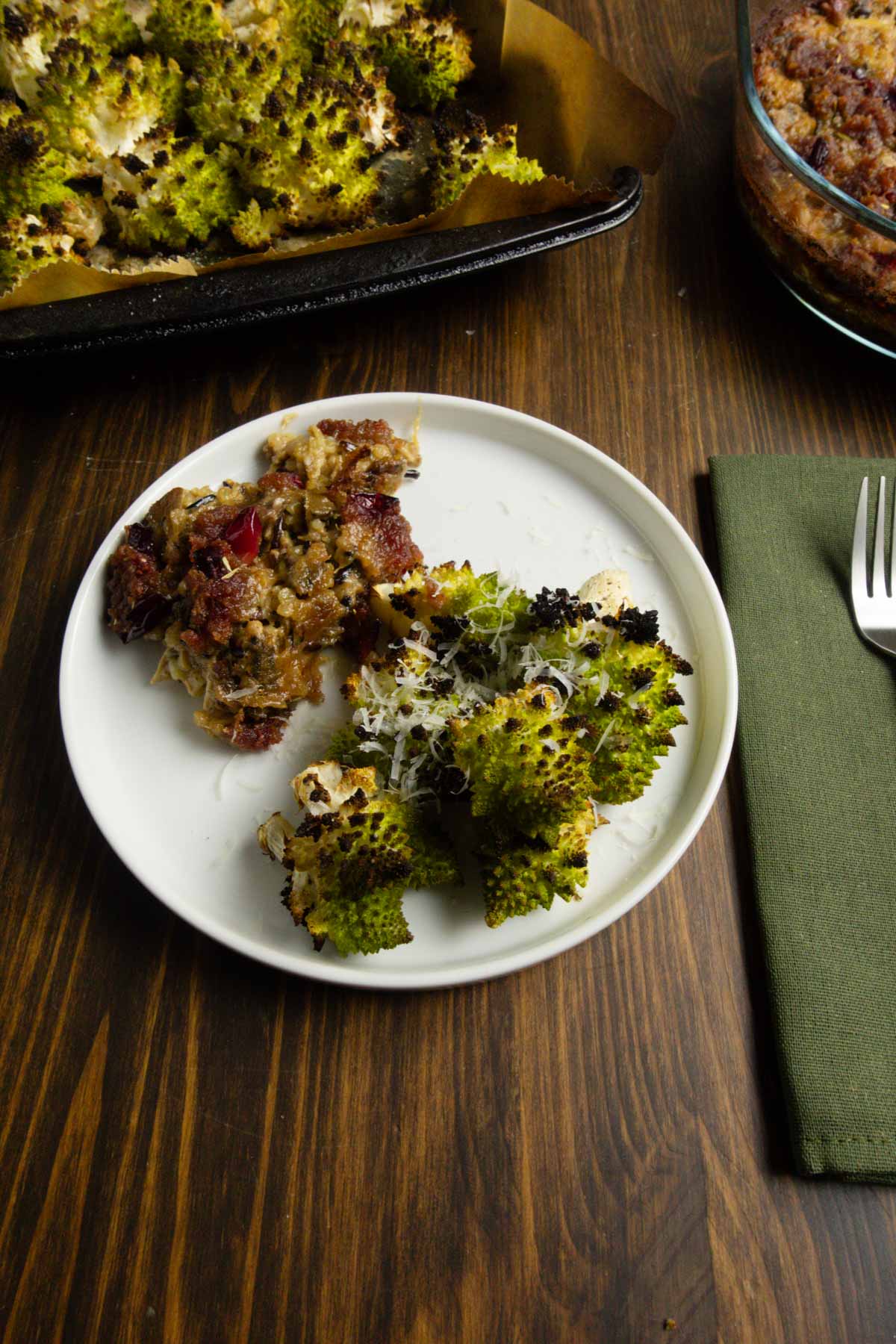
- Freshly grated Parmesan – Salty, nutty, and classic. Add while the romanesco is still hot so it melts into the crevices.
- Lemon zest or a squeeze of lemon juice – Brightens the roasted flavors and balances the nuttiness.
- Browned butter – Drizzle lightly for warmth and depth; especially good if serving alongside richer mains.
- Red pepper flakes – Just enough heat to wake everything up without overpowering the vegetable.
- Toasted breadcrumbs or panko – Adds crunch on crunch and makes the dish feel more substantial.
- Chopped herbs – Parsley for freshness, thyme for earthiness, or sage if you’re leaning cozy.
- Aged balsamic or balsamic glaze – A restrained drizzle brings sweetness and acidity without stealing the show.
- Anchovy paste or finely chopped anchovies – For a quiet umami boost that won’t taste fishy, just deeply savory.
Each of these works best when added at the end, letting the Romanesco stay crisp while the topping does its supporting-act magic.
Serving Suggestions
Roasted Romanesco is at home alongside cozy, savory mains that appreciate a crisp green counterpoint:
- Chicken and Wild Rice Casserole
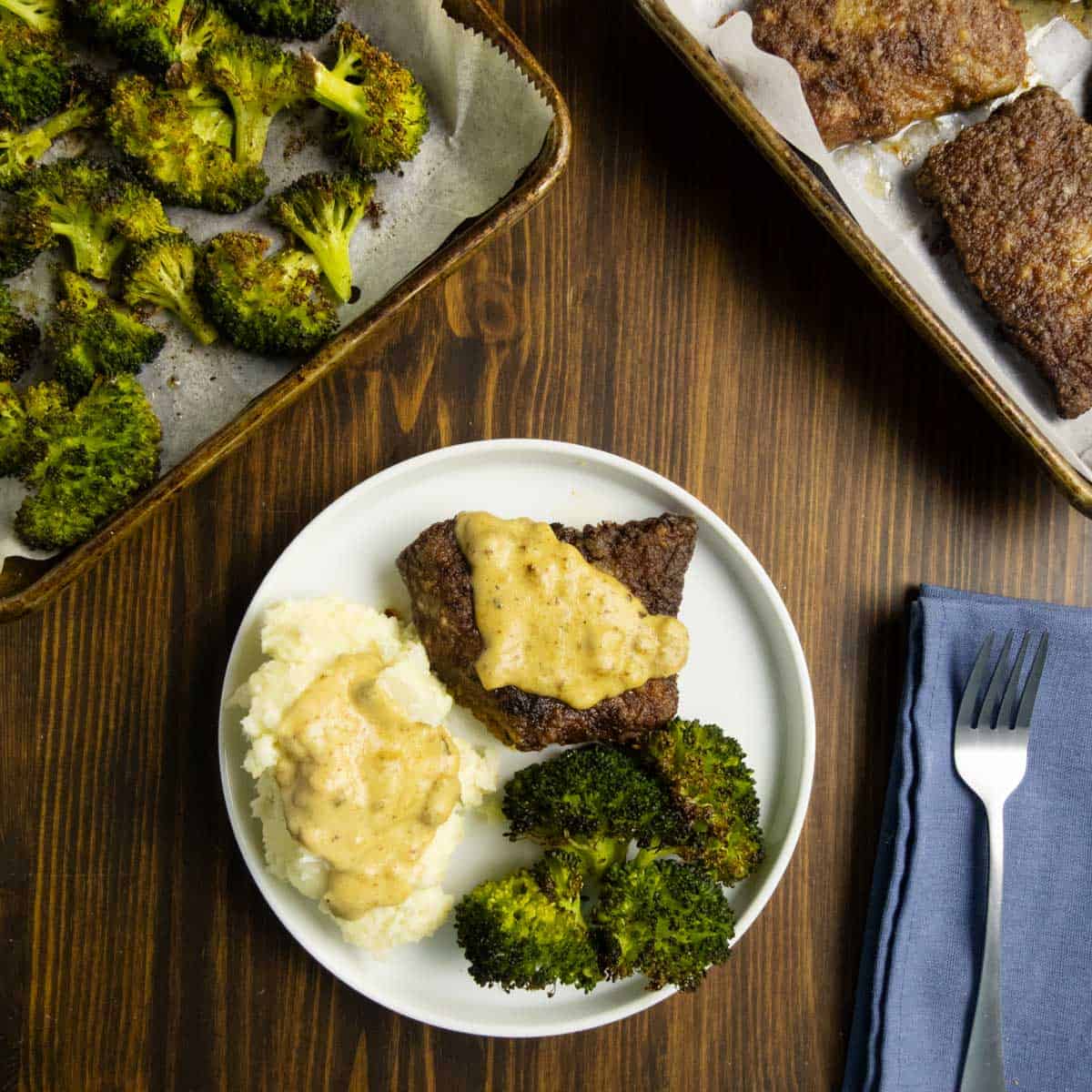
- Cube Steak with Gravy
- Chicken Marsala (without wine)
- Roasted Pork Tenderloin with Dijon Mustard Sauce
- Boneless Beef Ribs
It’s also excellent folded into grain bowls, tossed with pasta and butter, or finished with a squeeze of lemon and shaved Parmesan.
FAQs
High heat plus natural sugars equals browning. That’s flavor developing, not failure—unless it tastes bitter.
Yes, but expect faster cooking. Smaller pieces = more surface area = deeper browning sooner.
It’s slightly nuttier and more complex, but still mild. Think “cauliflower with personality.”
Not recommended. Frozen Romanesco releases too much moisture and won’t crisp properly.
Likely under-salted. Salt after roasting if needed—this vegetable can take it.
Romanesco feels fancy simply because it’s unfamiliar, but the technique is approachable and repeatable. It’s the kind of side dish that quietly expands your confidence in the kitchen.
If you enjoy cooking with ingredients that are just a little unexpected, I’d love for you to join my newsletter. I share what I’m experimenting with, what worked, what didn’t—and I always want to hear what you want to make next. The best kitchens are collaborative ones.
The Bluster and the Burrow
Roasted Romanesco Recipe
Ingredients
- 1 head Romanesco
- 2 tablespoons avocado oil
- salt to taste
- black pepper to taste
Instructions
- Preheat the oven to 450°F and line a baking sheet with parchment paper.
- Cut 1 head Romanesco into evenly sized florets and dry thoroughly.
- Toss with 2 tablespoons avocado oil, salt, and black pepper until lightly coated.
- Spread into a single layer—give the florets space to roast, not crowd.
- Roast for 25 minutes, then test for doneness by piercing with a knife.
- If tender with deeply browned edges, it’s ready. If not, return to the oven for 5–10 more minutes.
Notes
- Dryness is non-negotiable. Any lingering moisture will steam the romanesco and prevent crisping. Pat it dry like you mean it.
- High heat is the point. Romanesco thrives at temperatures that scare softer vegetables. Trust the process.
- Color ≠ burnt. Deep golden brown with some darker edges equals flavor. Blackened and bitter is the line—stop just before it.
- Spacing matters more than time. Crowded pans = pale vegetables. Use two pans if needed.
- Salt immediately after roasting if it looks done but tastes flat—hot vegetables absorb seasoning better.


This is one of my favorite vegetables when I can find it in season. Let me know if you’ve had the opportunity to try it.