Dry Brined Chicken Thighs

As an Amazon Associate, I earn from qualifying purchases. This post may contain affiliate links. If you purchase through them, I may earn a small commission at no extra cost to you.
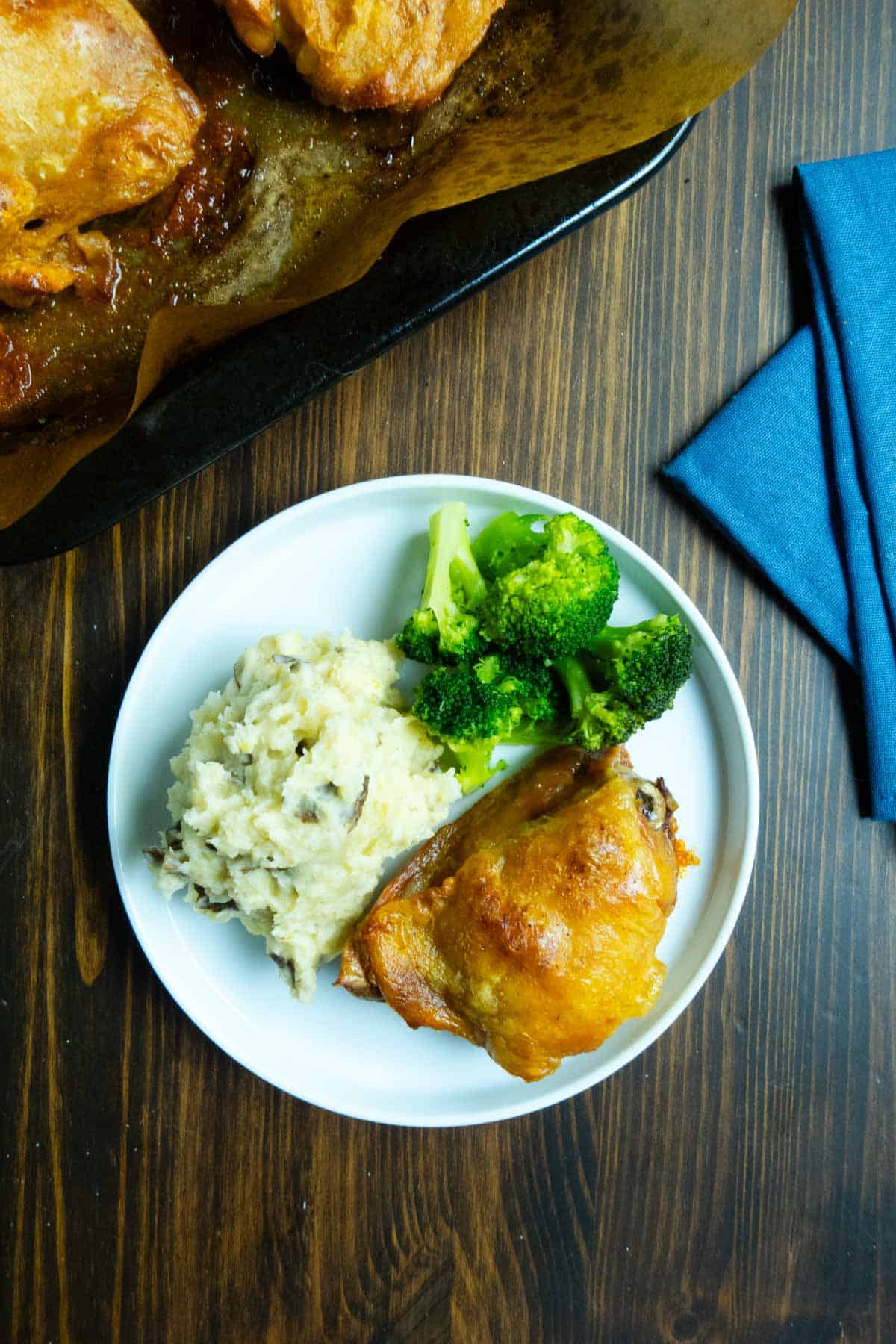
Dry brined chicken thighs are one of the simplest ways to make everyday chicken taste intentional. Most recipes rely on marinades or heavy sauces to create flavor; this method builds seasoning directly into the meat while engineering the skin for crisping.
Salt reshapes texture as much as taste, drawing moisture outward and then redistributing it so the thighs stay juicy even at higher roasting temperatures. Leaving the skin uncovered creates a dry surface that roasts instead of steams, allowing proper fat rendering and deep browning through the Maillard reaction. The result is deeply seasoned chicken with golden skin that holds its own without distraction. Once you understand this technique, chicken stops being filler and becomes a foundation.
Why You’ll Love this Recipe
- Deep seasoning without marinades or long prep
- Crisp skin that actually stays crisp
- Juicy meat that tolerates higher roasting heat
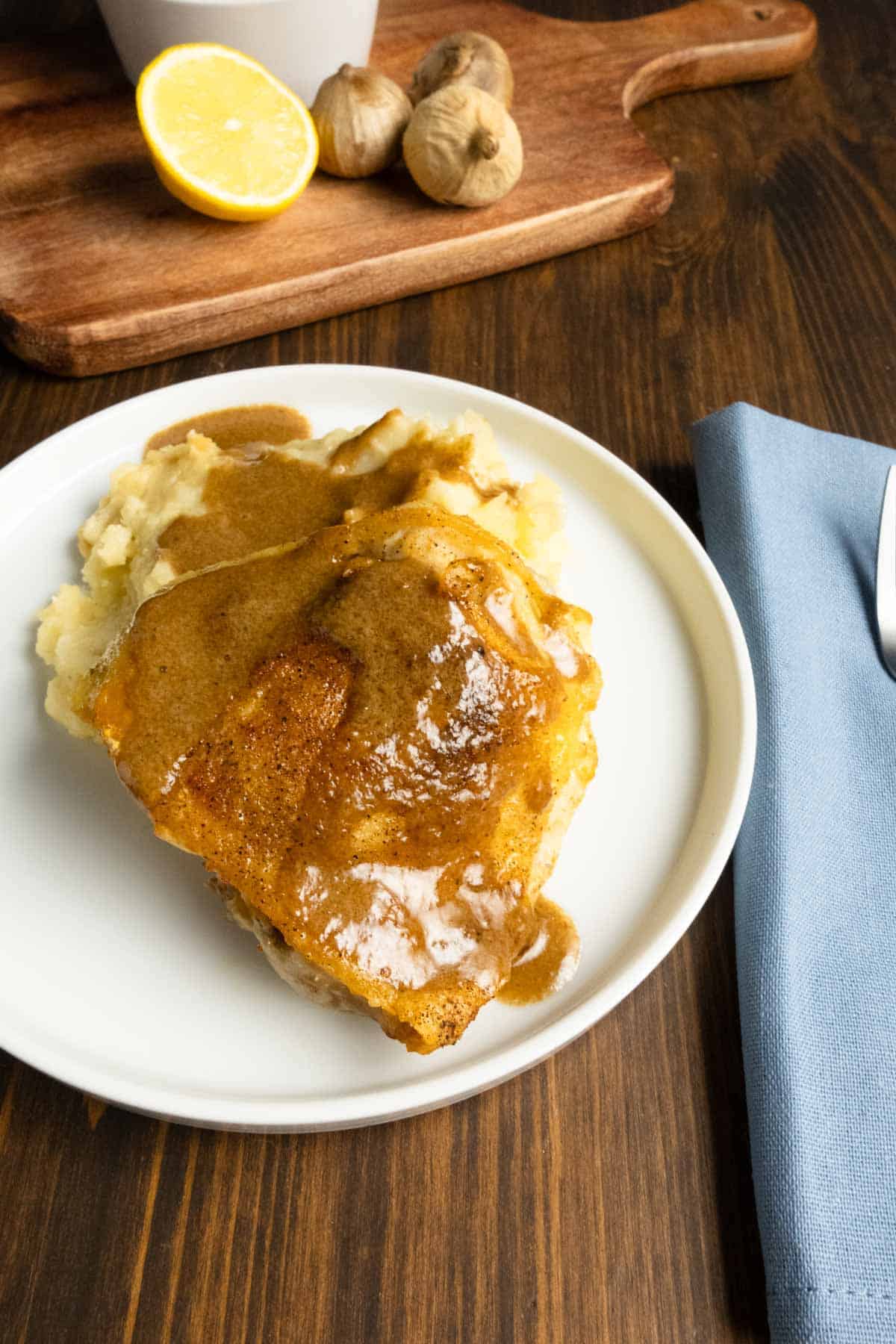
- A reliable base for sauces like black garlic cream sauce
- Minimal mess compared to wet brining
- Builds confidence through technique, not tricks
What You’ll Walk Away Knowing
- How dry brining seasons meat from the inside out
- Why airflow is essential for crisp skin
- How salt affects moisture retention and protein structure
- Sensory cues that tell you the skin is ready to roast
- Why higher finishing temperatures improve dark meat texture
A Note on Dry Brining
Dry brining works through osmosis and diffusion. Salt pulls moisture to the surface, dissolves, and then reabsorbs into the meat over time. This redistributes seasoning while altering protein structure so the chicken retains more moisture during cooking.
Airflow is just as important as salt. Resting the chicken uncovered on a wire rack allows circulating cold air to dehydrate the skin slightly. That dry exterior enables proper fat rendering and efficient browning once the chicken hits a hot oven.
This is why dry-brined poultry tolerates higher roasting temperatures. The altered protein structure holds onto moisture even as the exterior browns aggressively.
If you want to explore this technique further, this is the same salt-first approach I use across my dry brining recipes, from ribeye steak to fattier birds like duck.
Ingredient List
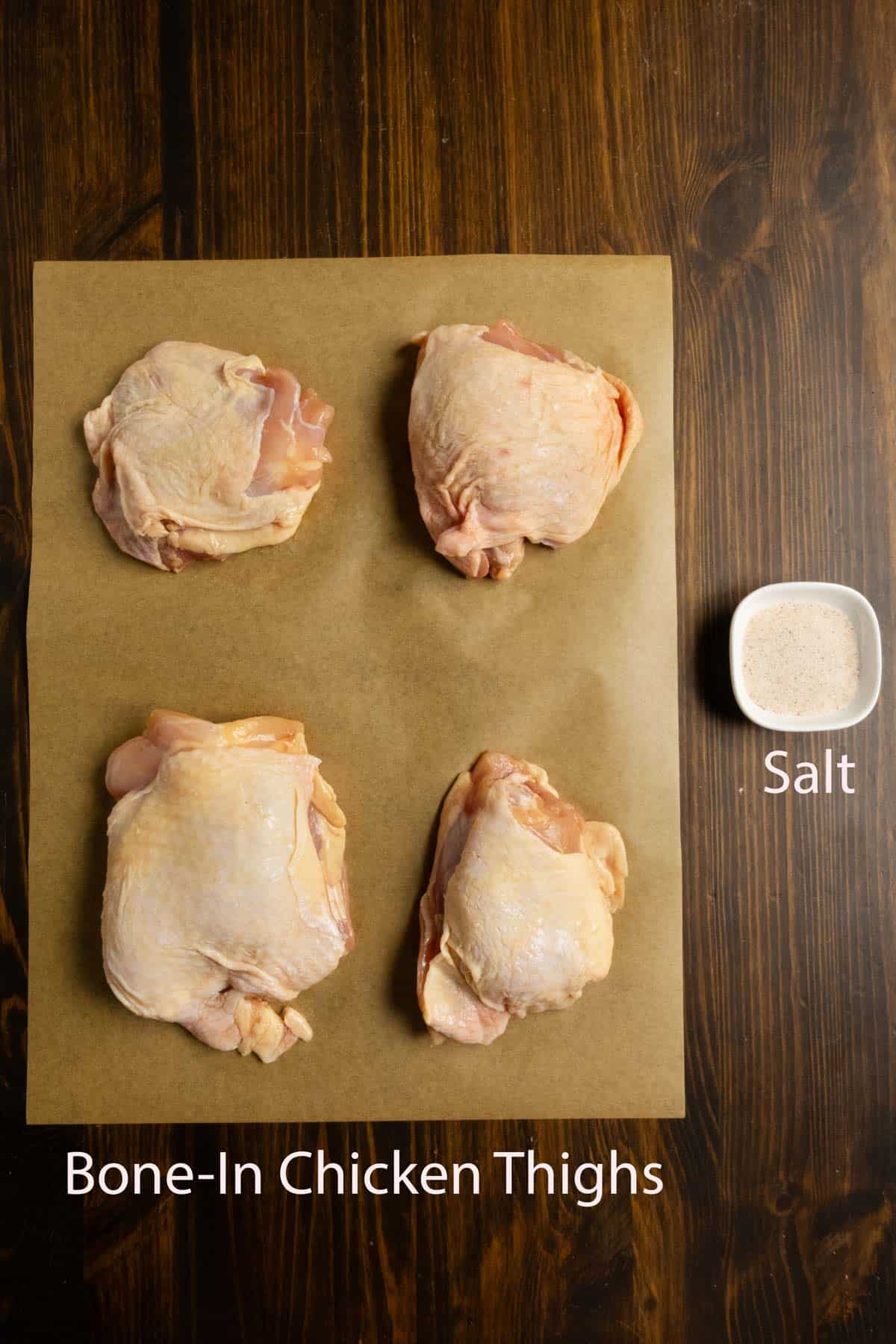
Chicken Thighs: Bone-in, skin-on thighs provide the best balance of fat, collagen, and flavor. The skin protects the meat while rendering into crispness during roasting.
Kosher Salt: The foundation of the technique. Diamond Crystal is ideal due to its lighter flake structure. If using Morton kosher salt, use slightly less because it is denser by volume. You can also use sea salt, Himalayan, or Redmond Real Salt. Avoid iodized salt because it is too harsh tasting.
How to Make Dry Brined Chicken Thighs
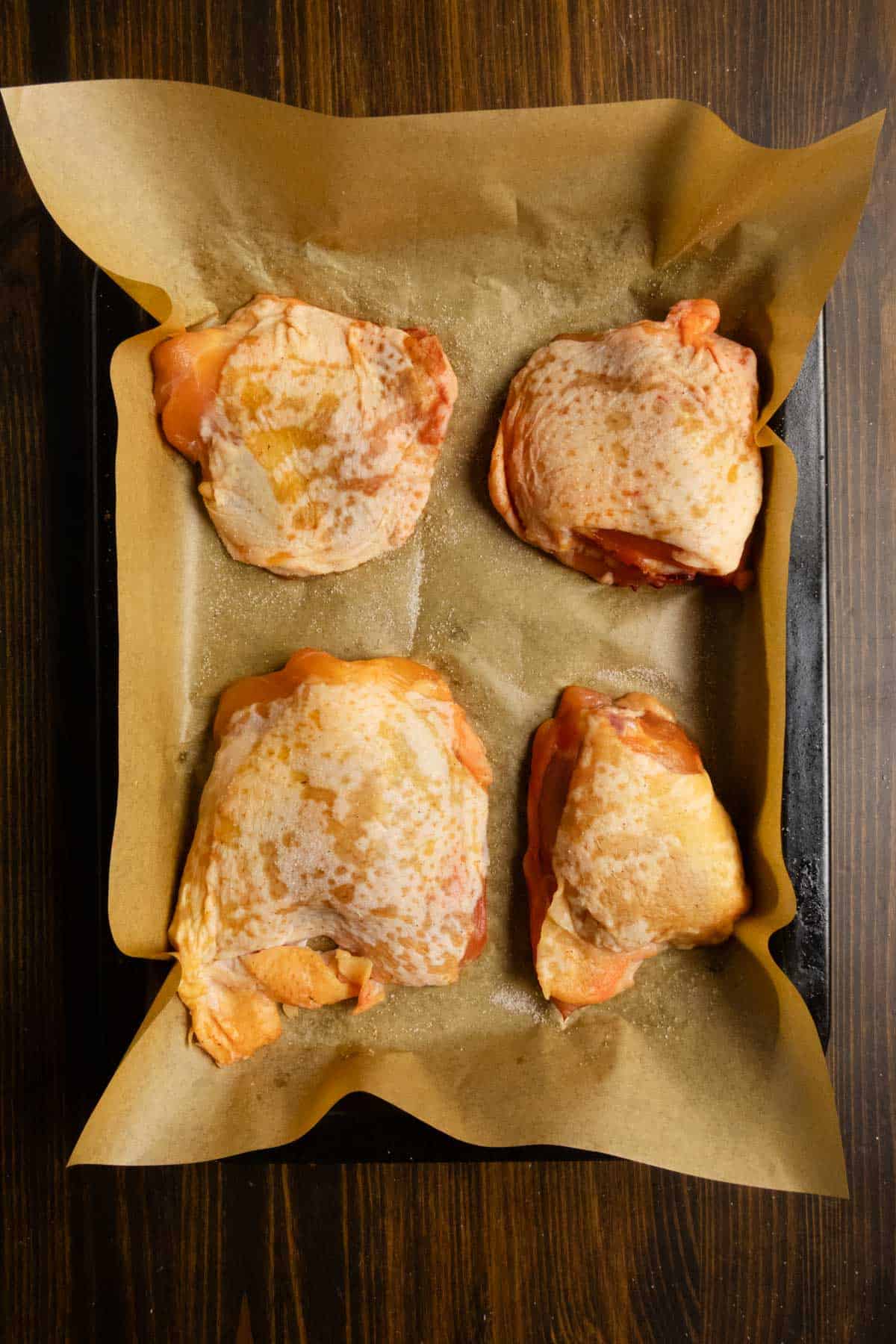
- Pat the chicken completely dry. Surface moisture blocks salt adhesion and slows browning. Dry skin is the first step toward crisp skin.
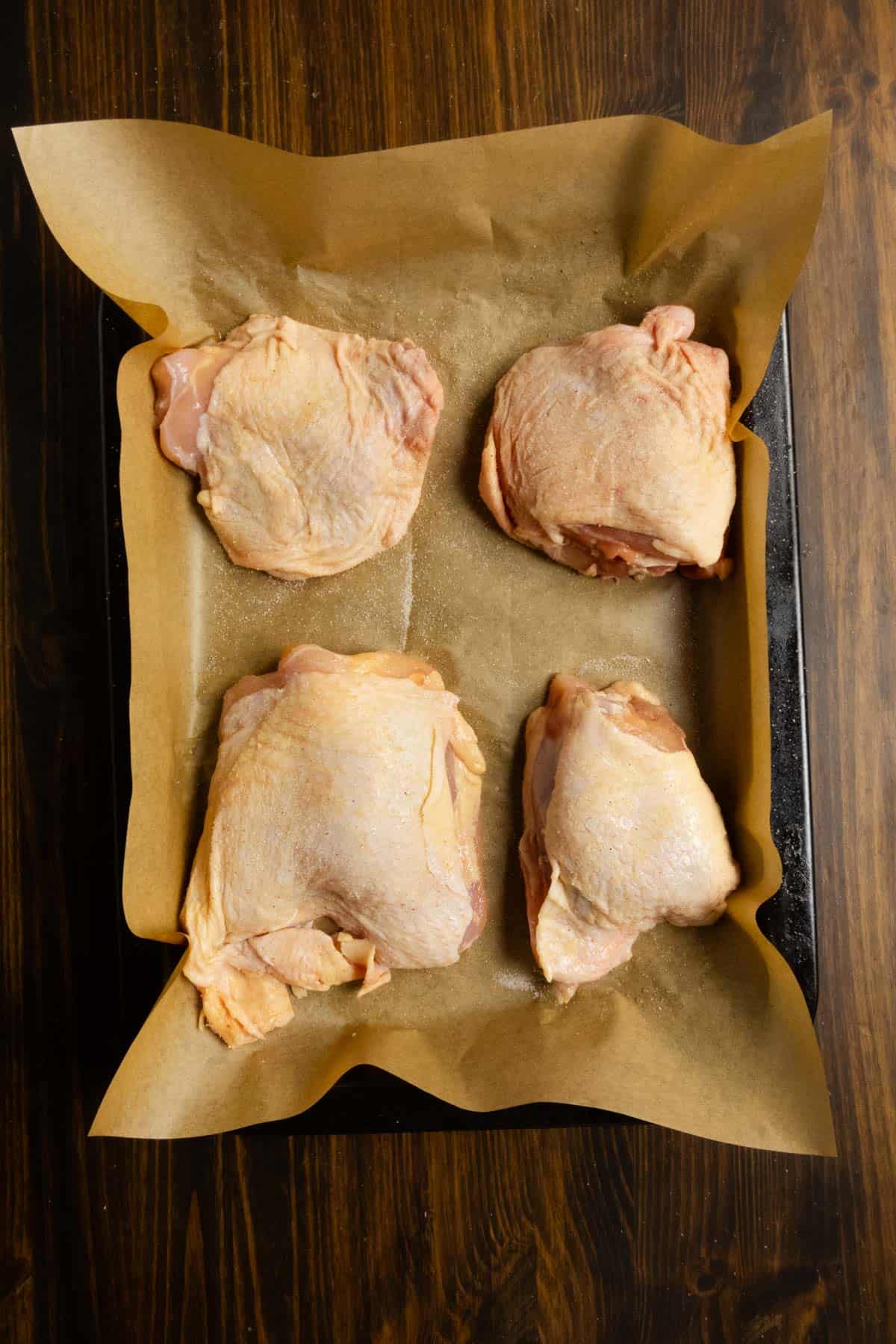
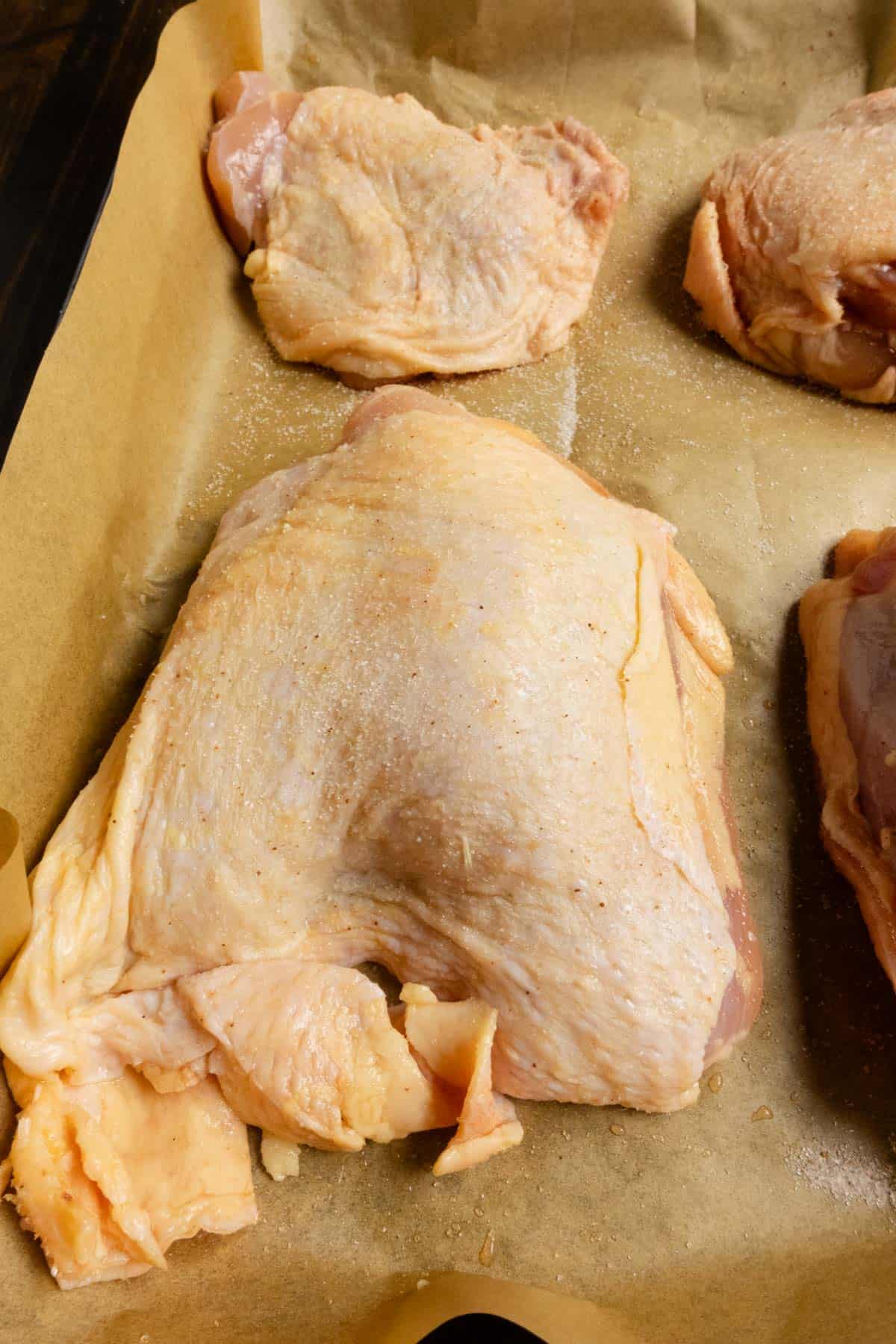
- Salt evenly on all sides. Use about ¾ to 1 teaspoon kosher salt per pound. Focus slightly more on the skin side. The surface should look evenly seasoned, not crusted.
- Rest uncovered on a rack in the refrigerator. Place the thighs skin-side up on a wire rack set over a baking sheet. Elevation allows airflow underneath, which dries the skin more efficiently. Eight to twelve hours works well. Twenty-four hours is ideal.
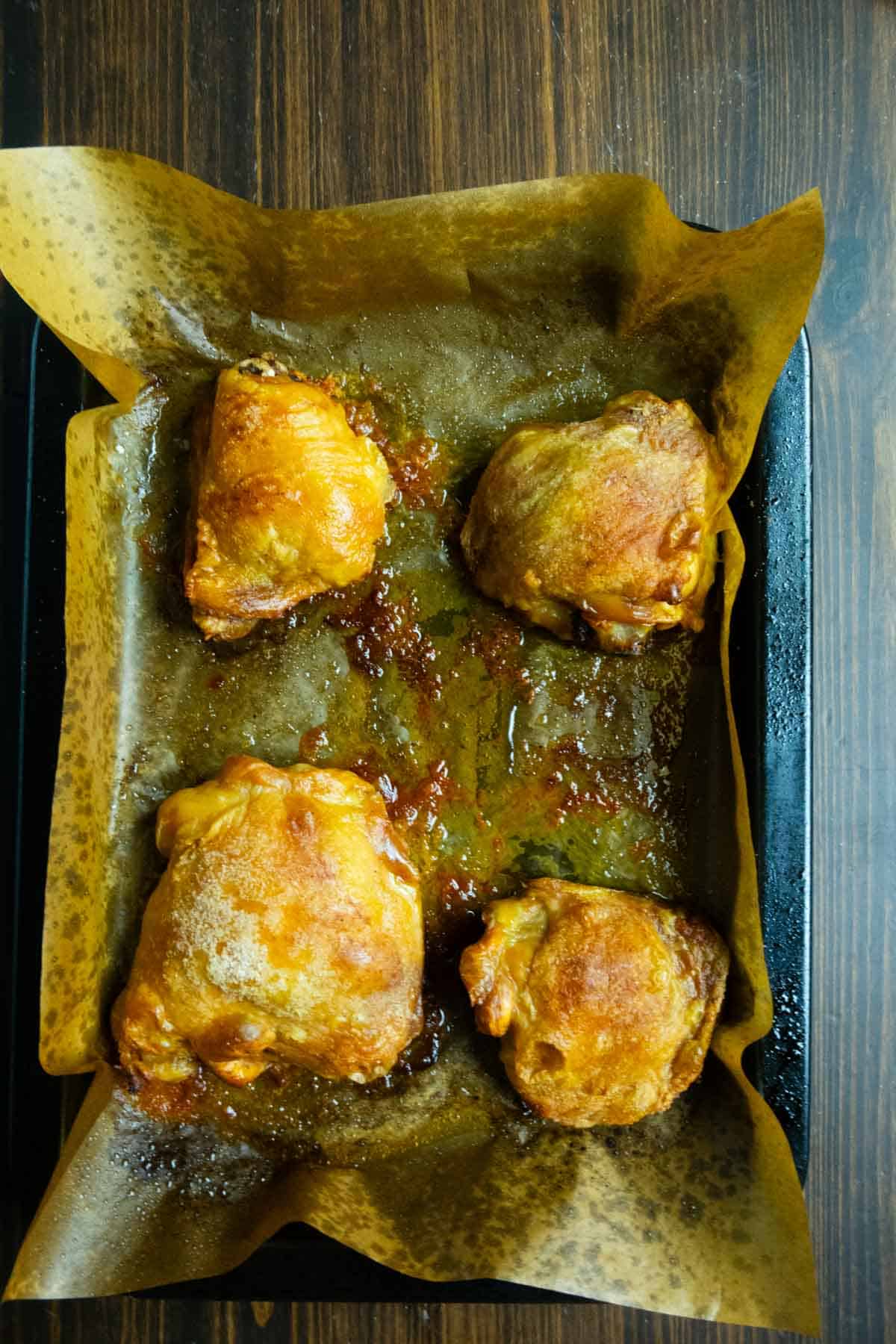
- Preheat the oven to 425°F. Higher heat encourages fat rendering and Maillard browning. Let the oven fully preheat so the skin begins crisping immediately.
- Roast until deeply golden. Cook for 40 to 45 minutes. The skin should look taut and lacquered. Internal temperature should reach 175°F to 185°F. At this range, the meat shifts from firm to silky as collagen melts into gelatin.
- Rest briefly before serving. Five minutes allows juices to redistribute while the skin firms instead of softening.
Expert Tips
This recipe is intentionally minimal. Removing variables makes it easier to see exactly what salt and airflow are doing, which builds technique faster than layered recipes.
Do not cover the chicken. Trapped humidity reverses the skin-drying process.
Skip oil before roasting. The skin contains enough fat and will render naturally.
Roast hotter than you would normally. Dry brining protects moisture and allows aggressive heat.
If the skin browns too quickly, reduce the oven slightly rather than tenting with foil, which traps steam.
Storage: Refrigerate uncovered until fully cooled, then cover. This preserves skin texture.
To Reheat: Use a 375°F oven or a hot stainless steel skillet skin-side down. Avoid microwaving if texture matters.
Plating and Finishing Touches
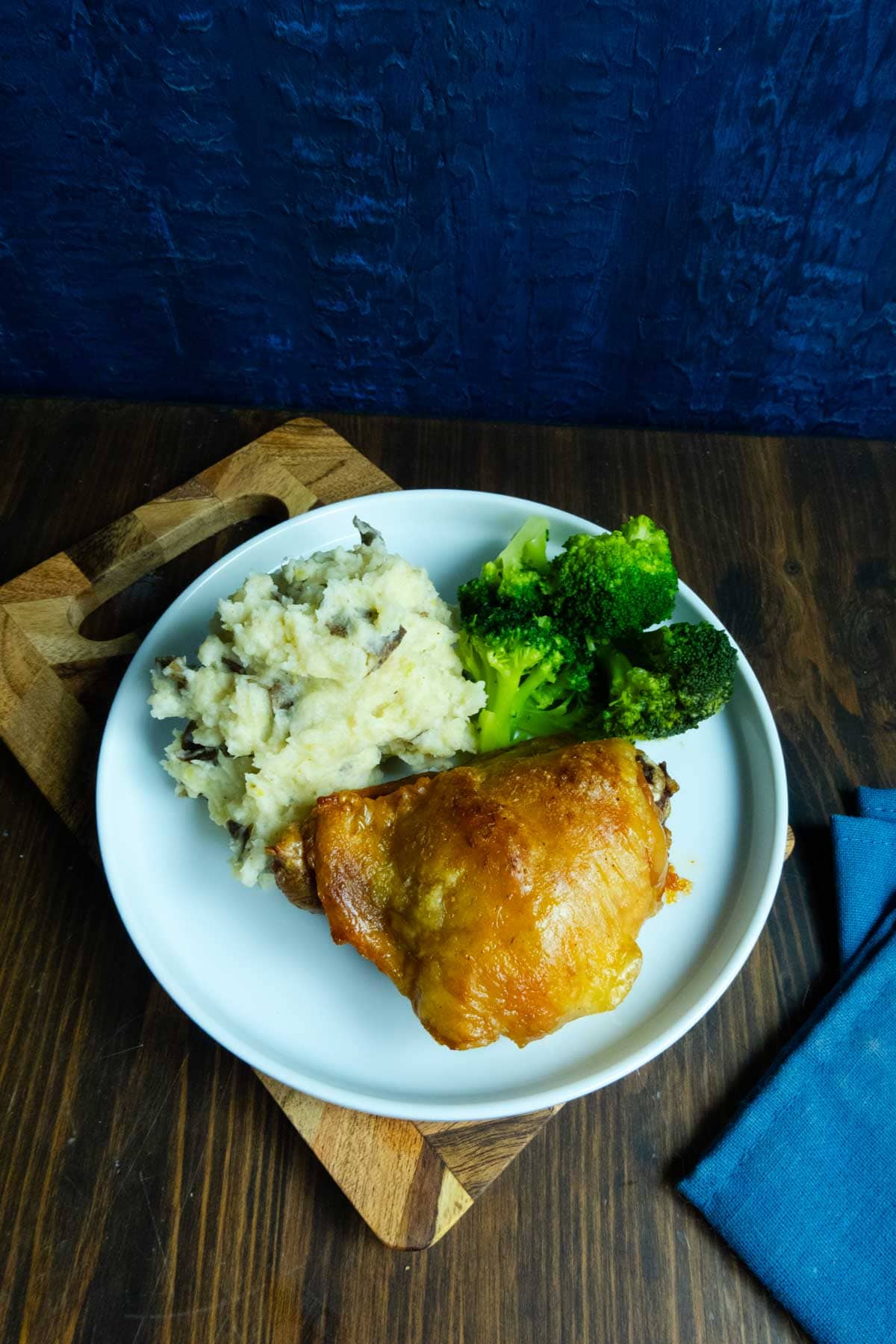
For a minimal presentation, place the thigh slightly off-center on a warm plate and leave the skin fully visible. Crisp skin should never be buried under sauce.
For a weeknight finish, add flaky salt and a squeeze of lemon. The acidity sharpens the rendered fat and brightens the seasoning. Or brush lightly with chipotle barbecue sauce in the final minutes of roasting. Dry-brined skin holds glaze better than wet poultry.
This is a foundational recipe that elevates the weeknight chicken dishes you’re already preparing. For an elevated version, try a sauce to pair it with, such as Chicken Marsala without Wine or Black Garlic Sauce. Look for future sauce recipes that capitalize on wonderful foundation that dry brining brings to the table.
If plating in bowls, smear a thin layer of roasted garlic or compound butter beneath the chicken before setting it down. The heat releases aroma and creates a subtle built-in sauce.
Serving Suggestions
Black Garlic Cream Sauce with Crispy Chicken Thighs: Fermented sweetness melts into the rendered fat, creating a silky contrast against brittle skin.
Roasted Brussels Sprouts: Deep caramel edges echo the roasted notes of the chicken while bitterness keeps the dish grounded.
Restaurant Baked Potato: Split open and buttered, the fluffy interior absorbs chicken juices like a built-in sauce.
Cheesy Garlic Mashed Potatoes: Soft and rich against crisp skin, creating a classic texture contrast.
Spicy Cucumber Salad: Cold acidity cuts through richness and resets the palate between bites.

FAQs
For texture and repeatability, yes. Marinades mostly affect the surface. Dry brining changes internal seasoning and moisture retention.
Yes. Even 4 to 6 hours improves flavor. Overnight delivers the best texture.
The USDA lists 165°F as the safe minimum. Dark meat benefits from going higher because collagen breaks down into gelatin, making the texture more tender.
You can, but salt should remain primary. Many spices scorch at high roasting temperatures.
Yes, though you will see less dramatic skin crisping due to reduced fat and structure.
If you have never dry brined chicken before, this is one of those techniques that quietly changes how you cook. Simple, repeatable, and deeply reliable.
If you enjoy learning the kinds of techniques that build real kitchen confidence, you’re always welcome in my newsletter. It’s where I share deeper skills, thoughtful meals, and the slower side of from-scratch cooking.
The Bluster and the Burrow
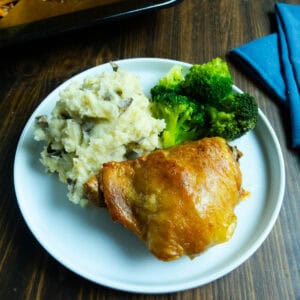
Dry Brined Chicken Thighs
Equipment
- Wire Rack optional
Ingredients
- 4 bone-in chicken thighs
- 1 tablespoon salt
Instructions
- Pat the chicken completely dry. Surface moisture blocks salt adhesion and slows browning. Dry skin is the first step toward crisp skin.
- Salt evenly on all sides. Use about ¾ to 1 teaspoon kosher salt per pound. Focus slightly more on the skin side. The surface should look evenly seasoned, not crusted.
- Rest uncovered on a rack in the refrigerator. Place 4 bone-in chicken thighs skin-side up on a wire rack set over a baking sheet. Elevation allows airflow underneath, which dries the skin more efficiently. Eight to twelve hours works well. Twenty-four hours is ideal.
- Preheat the oven to 425°F. Higher heat encourages fat rendering and Maillard browning. Let the oven fully preheat so the skin begins crisping immediately.
- Roast until deeply golden. Cook for 40 to 45 minutes. The skin should look taut and lacquered. Internal temperature should reach 175°F to 185°F. At this range, the meat shifts from firm to silky as collagen melts into gelatin.
- Rest briefly before serving. Five minutes allows juices to redistribute while the skin firms instead of softening.

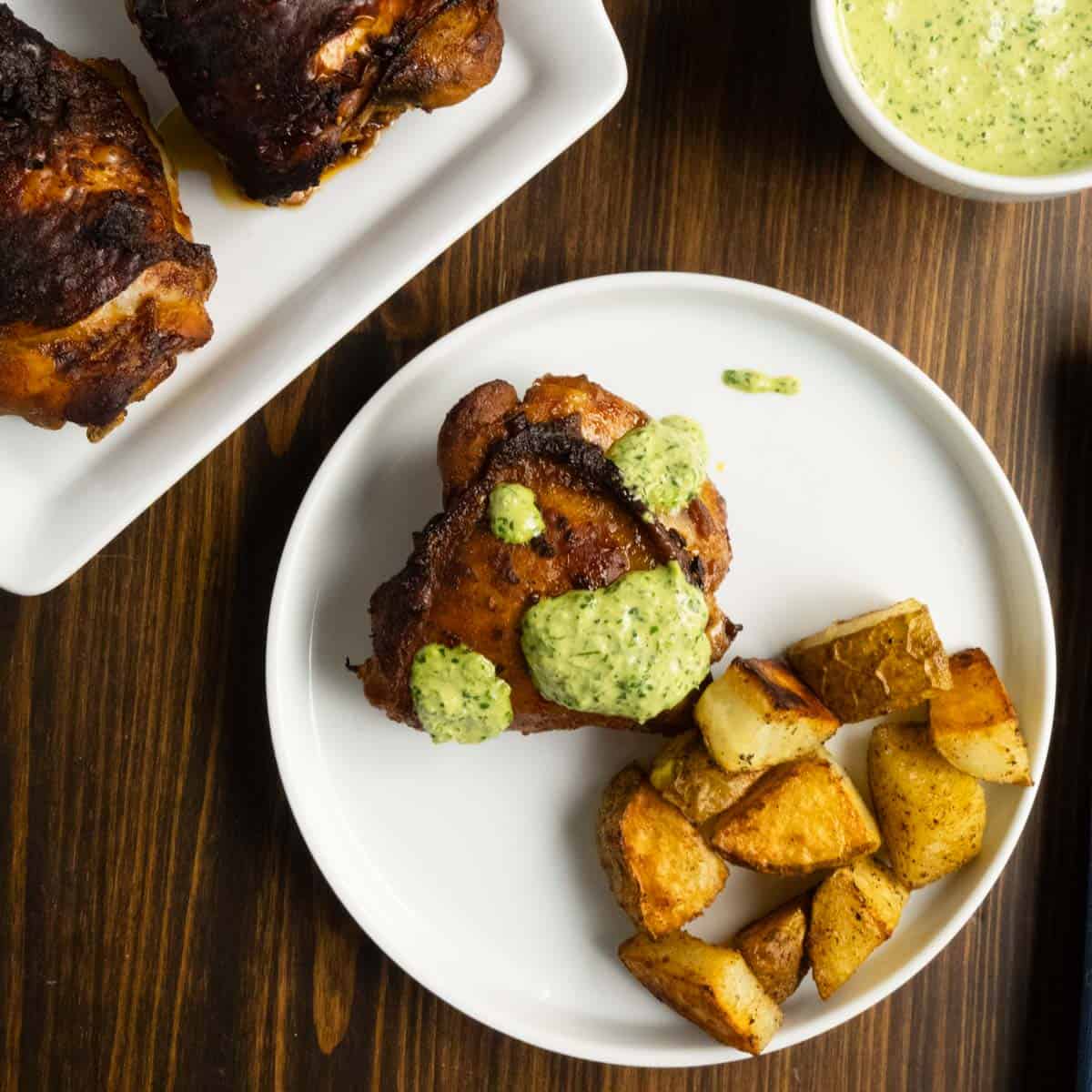
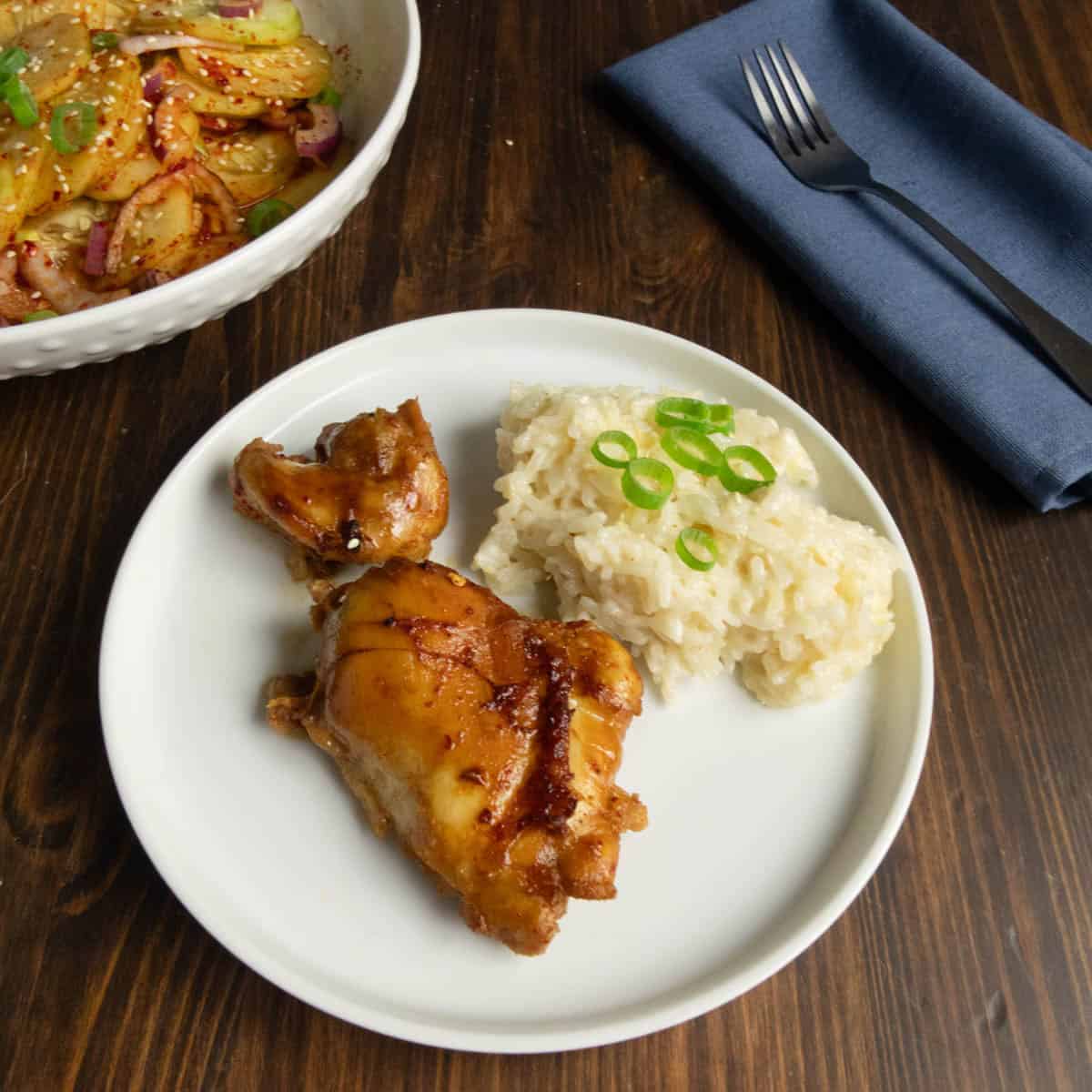

Chicken thighs are my go to on a busy weeknight. They’re so easy to prep the night before and know what you’re going to have for dinner the next night.